Basement Floor Drain Problems in Englewood: Smells, Gurgles and Backups
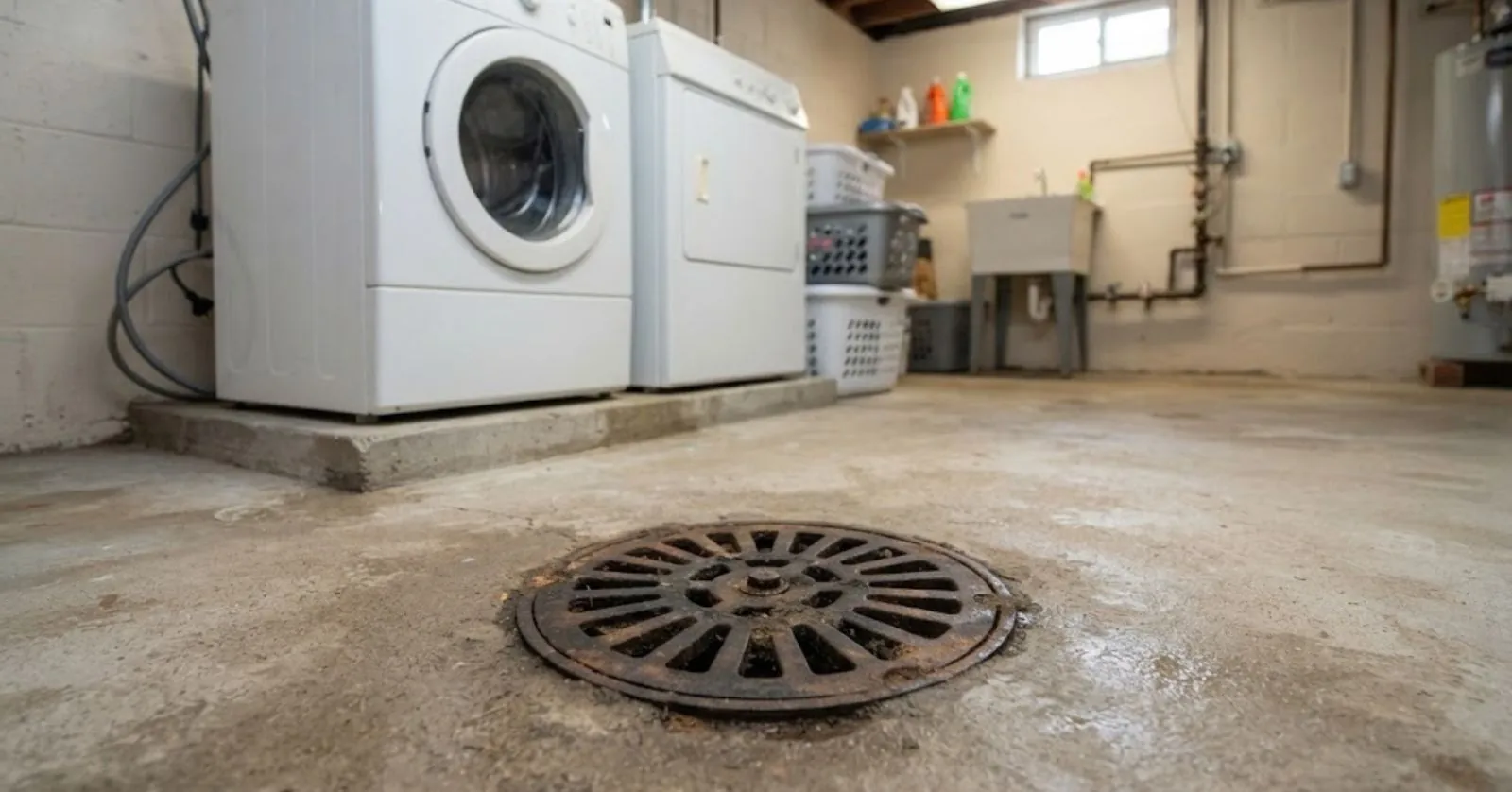
Most older Englewood homes have a floor drain in the basement, usually near the laundry area or the water heater. It is easy to forget until it starts to smell, gurgle or, worst of all, push water back up onto the floor. This guide explains what each of those symptoms usually means, how to tell sewage from groundwater, and what actually fixes the problem.
How a basement floor drain works
A floor drain is connected to the building sewer, often very close to where the main line leaves the house. Like every drain, it has a trap, a bend that holds water to block sewer gas from coming back into the basement.
Because it sits at the lowest point of the plumbing system, the floor drain is also the first place sewage appears when the main line is blocked. That makes it a useful early warning, and a nuisance when it misbehaves.
What the symptom usually means
Match what you are seeing to the likely cause before calling anyone.
| Symptom | Likely cause | What usually fixes it |
|---|---|---|
| Sewer smell, drain looks dry | Trap water has evaporated. | Refill the trap, then add a primer or seal. |
| Gurgling when the washer or toilet drains | Partial blockage in the main line. | Clean the main line and camera it. |
| Water rises during laundry | Main line restricted, surge has nowhere to go. | Clear the main line promptly. |
| Sewage on the floor with no water running | Main line blocked, or a problem in the district main. | Check with neighbors, then clear the line or call the district. |
| Clear water seeping at floor edges after rain | Groundwater, not the drain. | Sump pump and exterior drainage. |
Water coming up the floor drain now?
Stop every washer, shower and toilet in the house, then call. We answer 24/7.
The dried-out trap, a Colorado classic
Englewood's dry air evaporates water quickly, and a floor drain that is rarely used can lose its trap water within weeks. Once the trap is dry, sewer gas has an open path into the basement.
The quick fix is to pour a gallon or so of water into the drain. A small amount of mineral oil on top slows evaporation. The lasting fix is a trap seal device or a trap primer, which adds water automatically. The IPC (International Plumbing Code) calls for that kind of trap seal protection on floor drains that are subject to evaporation, which describes most basement drains in a dry climate.
What to do when the floor drain backs up
These steps limit the mess and help identify the cause.
- Stop all water use in the house immediately, including upstairs.
- Note what was running when it started, such as the washer, a shower or nothing at all.
- Ask a neighbor or two whether they are having backups, which would point to the district main.
- Keep people and pets out of any sewage and wear gloves if you must move items.
- Do not pour chemical cleaners into a backed-up drain. They sit in the water and endanger whoever opens the line.
Sewage or groundwater?
The two are easy to confuse and need completely different fixes. Sewage comes up through the drain grate, often discolored and with an obvious smell, and usually appears when water is being used in the house.
Groundwater tends to appear as clean water along the edges of the floor or through cracks, often after heavy rain or snowmelt, and is unrelated to water use inside. Parts of Englewood closer to the South Platte River have higher groundwater, and those basements are the ones that benefit most from a working sump pump.
If you are not sure, look at where the water first appears and whether it smells. That single observation usually tells a plumber which problem to solve.
Fixing repeat backups for good
A main line that keeps backing up needs more than repeated snaking. A camera inspection shows whether roots are entering at a joint, whether a section has sagged, or whether grease is coating the pipe. Our drain cleaning page covers the first step, and hydro jetting is the better tool for grease and fine roots.
If the camera shows structural damage, the long-term answer is repairing the lateral, which the owner is responsible for in Englewood's sanitation districts. See sewer line repair for the options.
A backwater valve is a separate tool. It stops sewage from the district main from flowing back into the house, but it does not help when the blockage is in your own line. After a camera inspection, a plumber can tell you whether one fits your basement's layout.
Laundry, lint and floor drains
Many Englewood basements have the washing machine draining into a laundry tub or standpipe near the floor drain. Washers discharge a lot of water quickly, so a partly restricted main line shows up here first, often as water rising in the floor drain during the spin cycle.
Lint is part of the problem. Washer discharge carries fibers that catch on rough cast iron and on roots in older laterals. A simple lint trap on the washer hose or laundry tub drain catches much of it and is worth adding in any older home.
Protecting a finished basement
When a basement has carpet, drywall and furniture, a backup is far more expensive to clean up. Owners who finish a basement in an older Englewood home should have the main line camera inspected first and address any roots or sags before the flooring goes down.
Keep the floor drain grate uncovered and reachable, even under a finished floor, and make sure the cleanout stays accessible behind any new walls. If sewage does reach finished space, drying and cleanup follow a different process from the plumbing repair, covered on our water damage restoration page.
Routine care for a basement floor drain
Pour water into the floor drain every few weeks if it is not used regularly, or install a trap seal so you do not have to remember. Keep lint, paint and debris out of it, especially near a laundry area, since floor drains are not designed to catch solids.
Know where the main cleanout is, usually near the base of the drain stack, and keep boxes and shelving away from it. A plumber who can reach the cleanout quickly clears a backup faster and for less.
Basements in lower parts of Sheridan, near Bear Creek and the river, see the groundwater version of this problem most often.
Sources
- International Code Council, International Plumbing Code trap seal protection requirements.
- South Englewood Sanitation District No. 1, sewer line responsibility and grease guidance.
- Colorado Water Conservation Board and FEMA floodplain studies, South Platte River corridor.
This guide is general information for Englewood-area property owners, not a substitute for an on-site inspection. Utility programs and rules change, so confirm details with the agency named.