Water Damage Restoration in Englewood, CO
Water damage restoration is the full process of recovering a home or business after water gets where it should not. It runs from water removal and drying through mold prevention and the repair of drywall, flooring and cabinets. In Englewood, CO restoration calls usually follow a burst pipe, a failed water heater, a sewer backup or a flooded basement, and the line for restoration is answered 24/7.
What to do in the first hour
The first steps protect your safety and your insurance claim.
- Stop the source of water if you can, such as closing the main shutoff for a burst pipe.
- Do not enter standing water where it may reach outlets or appliances. Switch off power at the panel if it is safe to reach.
- Take photos and video of the water, damage and belongings before moving anything.
- Move valuables, electronics and documents to a dry area.
- Call your insurance company to start the claim, and keep a record of who you spoke to.
Water on the floor right now?
Every hour counts for drywall and flooring. Call the restoration line any time.
Not all water is the same
The restoration industry standard, IICRC S500, sorts water damage by how contaminated the water is. That decides what can be dried and what must be removed.
| Category | Typical source | What it means |
|---|---|---|
| Category 1, clean water | Burst supply pipe or overflowing sink. | Materials can often be dried in place if handled quickly. |
| Category 2, gray water | Washing machine or dishwasher overflow. | Some porous materials may need removal. |
| Category 3, black water | Sewer backup or outside floodwater. | Porous materials are usually removed and the area disinfected. |
Clean water becomes more contaminated the longer it sits, so a quick response can keep a Category 1 loss from becoming a bigger job.
How restoration works
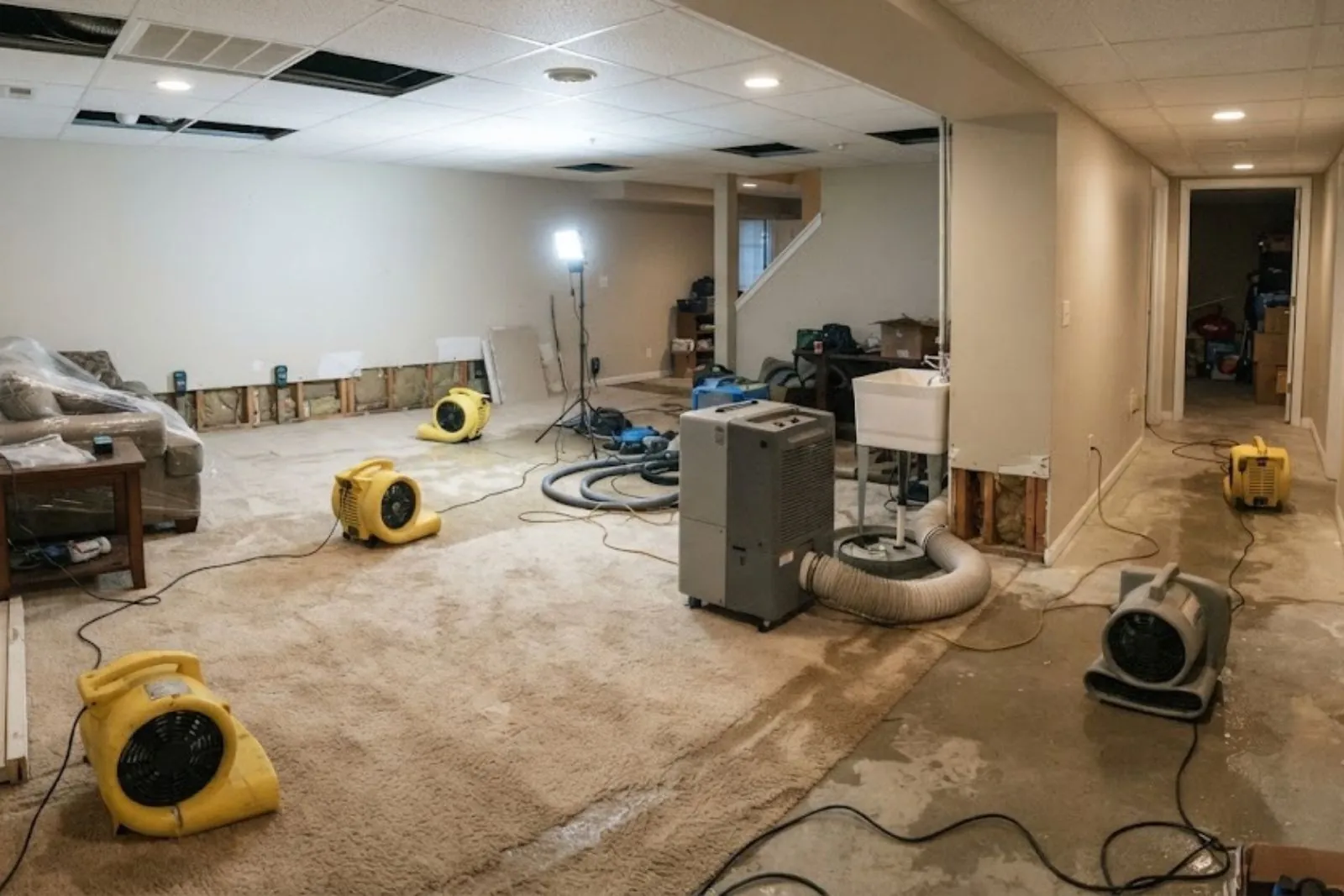
Restoration starts with mitigation, stopping the damage from spreading. Standing water is extracted, wet materials that cannot be saved are removed, and air movers and dehumidifiers are set up. Our water mitigation page covers that first phase in detail.
Drying is measured, not guessed. Moisture meters and thermal cameras map how far water has spread into walls, floors and cabinets, and readings are taken daily until materials reach normal dry levels.
Once everything is dry, the rebuild begins. Drywall is replaced, flooring and baseboards reinstalled, and cabinets repaired or replaced. The goal is to return the space to how it was before the loss.
Englewood water damage: common sources
Englewood's many post-war basement homes are where most local water damage shows up. Burst pipes during cold snaps, failed water heaters, sump pumps that stop during a storm and sewer backups all end up in the basement first.
Cold snaps are a frequent trigger. On December 22, 2022, the temperature at Denver International Airport dropped to 24 below zero, and burst pipes follow that kind of cold across the metro. The plumbing repair itself is a separate job, covered on our burst pipe repair page.
Colorado's dry air helps materials dry once equipment is running, but it does not dry a soaked wall cavity or subfloor on its own. Hidden moisture is where mold starts.
What affects the cost of water damage restoration
Restoration is priced by the scope of damage, which is documented as the work progresses.
Amount of water and area affected
A small area of wet carpet is very different from a flooded finished basement.
Category of water
Sewage and floodwater require removal and disinfection of more materials.
Time before drying starts
Faster response usually means less material to remove and replace.
Materials involved
Hardwood, cabinets and plaster take more work than carpet and drywall.
Rebuild scope
Replacing flooring, drywall and cabinets is often the largest part of the cost.
Many homeowners policies pay for sudden, accidental water damage, such as a burst pipe. Flooding from outside and sewer backups are often excluded unless extra coverage was purchased. Documentation of moisture readings and damage helps the claim.
Want a clear picture of the scope and cost? Call (833) 521-1033, day or night.
Water damage restoration questions in Englewood
As soon as possible. Drying within the first day or two greatly reduces the chance of mold and the amount of material that needs replacing.
Sudden, accidental water damage is covered by many policies. Flooding from outside and sewer backups often need separate coverage. Call your insurer early and document everything.
Drywall soaked by clean water can sometimes be dried in place if handled quickly. Drywall affected by sewage or left wet too long is usually cut out and replaced.
Often three to five days for a typical clean-water loss, depending on materials and how quickly drying began.
Yes. We work with owners, property managers and tenants, and provide documentation for the owner's insurer.
Water damage restoration in Englewood and nearby
Restoration calls are handled across ZIP codes 80110 and 80113, in basement homes, condos and commercial spaces. Homes in nearby Centennial are served the same way.
If the source is a leak you have not found yet, our leak detection page explains how it is located.