Water Mitigation in Englewood, CO
Water mitigation is the emergency first phase after water damage: stopping the spread, removing water and drying the structure quickly. It focuses on the first 24 to 72 hours, before repairs begin. In Englewood, CO fast mitigation is what keeps a burst pipe or flooded basement from becoming a mold problem, and the restoration line is answered 24/7.
What to do before the mitigation crew arrives
These steps are safe and help the crew work faster.
- Stop the water source if possible, such as closing the main shutoff.
- Keep people and pets out of standing water, especially near outlets and appliances.
- Photograph and video the damage before moving items.
- Move furniture off wet carpet and place foil or blocks under legs that stay.
- Open interior doors to help air move, but do not run fans on sewage-contaminated areas.
Standing water in the basement?
The sooner extraction starts, the more can be saved. Call the restoration line 24/7.
The mitigation process, hour by hour
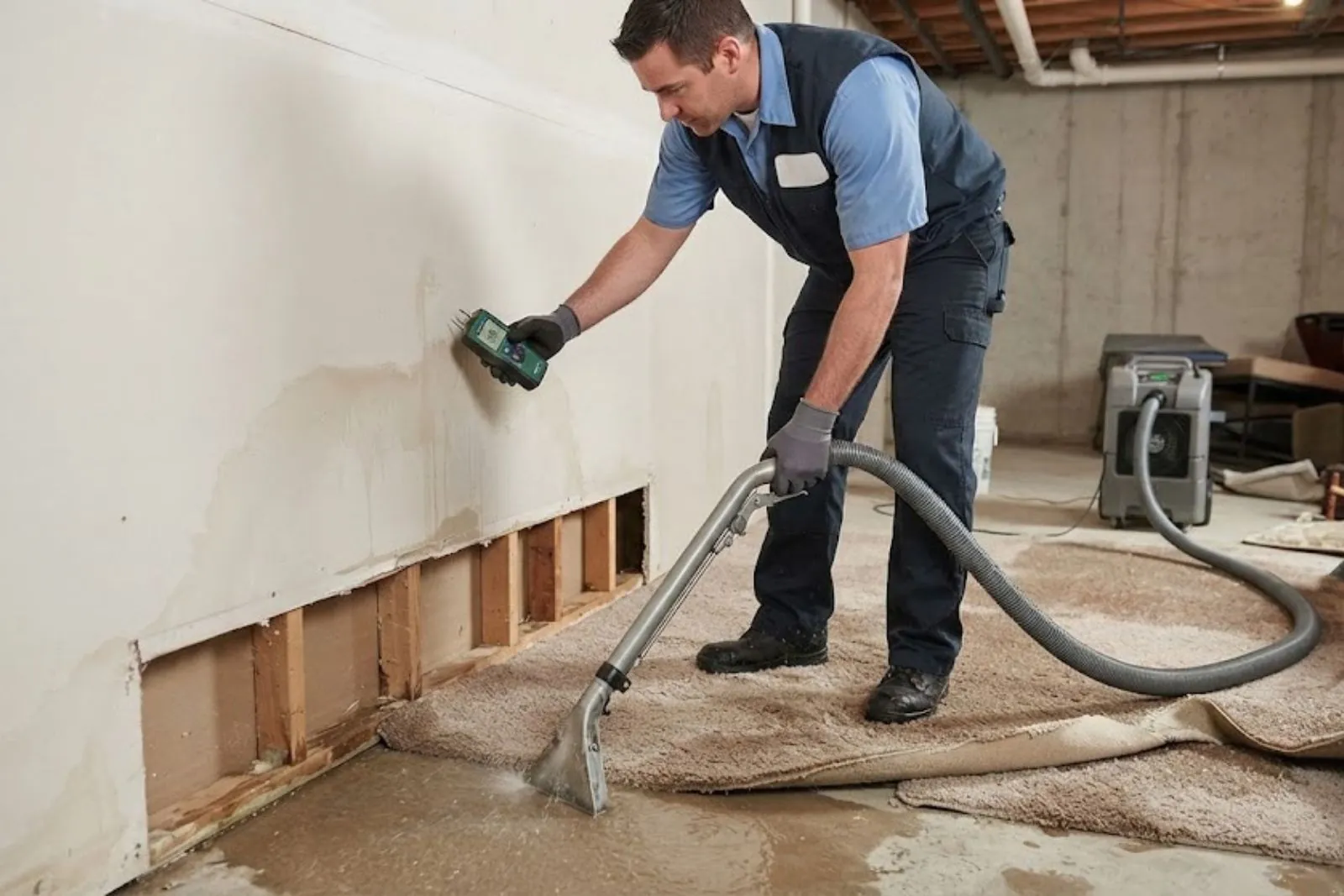
- Inspect and document. The crew identifies the source, the water category and the extent of the wet area with moisture meters.
- Extract water. Truck-mounted or portable extractors remove standing water and water held in carpet.
- Remove what cannot be saved. Wet carpet pad, soaked drywall and insulation are removed where drying in place will not work.
- Set up drying. Air movers and dehumidifiers are placed to dry walls, floors and cavities.
- Monitor daily. Moisture readings are taken each day and equipment is adjusted until materials are dry.
Once materials are dry, the rebuild is handled as part of water damage restoration.
Why the first 72 hours matter
Water moves fast. It wicks up drywall, soaks into subfloors and spreads under flooring. The longer it sits, the more material has to be removed.
Mold growth typically becomes a concern within a couple of days in wet materials. The restoration industry standard, IICRC S500, focuses on fast drying to prevent that. If mold is already present, mold remediation follows a separate standard, IICRC S520.
In Englewood's basement homes, water often collects under carpet and behind finished walls where it is not visible. Moisture mapping finds it before it becomes a problem.
What gets saved and what gets removed
Clean-water losses caught early often let carpet be dried in place, while the cushion pad underneath, which holds water like a sponge, is usually replaced. Solid wood furniture can be dried, but particleboard that has swelled rarely recovers.
When drywall is wet only at the bottom, crews often make a flood cut, removing a strip a foot or two above the wet line so the wall cavity and insulation behind it can dry. That is far cheaper than replacing whole walls later because moisture was trapped.
With sewage or outside floodwater, the rules change. Porous materials that the water touched, such as carpet, pad, drywall and insulation, are generally removed and the area disinfected before drying.
Mitigation versus restoration
The two terms are often used together, but they describe different phases.
| Phase | Goal | Typical timing |
|---|---|---|
| Mitigation | Stop damage from spreading and dry the structure. | First 24 to 72 hours. |
| Restoration | Repair and rebuild damaged areas. | After materials are dry. |
| Mold remediation | Remove mold and address the cause. | Only if mold has developed. |
If the water came from a plumbing failure, the leak itself needs repair. Our burst pipe repair and sump pump repair pages cover the most common causes.
What affects the cost of water mitigation
Mitigation is billed by the equipment and labor needed. These factors move the cost.
Size of the affected area
More square footage means more extraction and more drying equipment.
Water category
Contaminated water requires more removal and disinfection.
Drying time
Equipment is billed by the day until readings reach normal levels.
Materials removed
Removing drywall, carpet pad and insulation adds labor and disposal.
Access
Finished basements and tight spaces take more time to set up.
Mitigation is often covered when the underlying water damage is covered by your policy. Insurers expect prompt mitigation, and delay can affect a claim. Keep all moisture logs and photos.
Want to know what mitigation will involve? Call (833) 521-1033, day or night.
Water mitigation questions in Englewood
They are different phases. Mitigation comes first, stopping the spread and drying the building, and restoration follows with the repairs and rebuild.
Extraction and setup usually happen the first day. Drying often takes three to five days, depending on materials and the extent of the water.
It often does when the water damage itself is covered. Insurers generally expect prompt action to limit the loss.
Fans help surface drying, but hidden moisture in walls and subfloors needs dehumidifiers and moisture readings to confirm it is dry.
Yes. Water mitigation calls are answered 24/7 on the restoration line.
For clean-water losses, most families stay home while equipment runs, though the fans and dehumidifiers are noisy. With sewage contamination, keep children, pets and anyone with health concerns out of the affected area until it has been cleaned and disinfected.
Water mitigation in Englewood and nearby
Mitigation crews respond across ZIP codes 80110 and 80113 and nearby Sheridan, where many homes have similar basements and similar water damage risks.