Leak Detection in Englewood, CO
Leak detection is the process of finding where water is escaping from a plumbing system before anything is opened up. It uses the water meter, pressure tests, acoustic listening equipment, thermal imaging and moisture meters. In Englewood, CO the goal is simple: cut one small opening in the right spot instead of several wrong ones.
My water bill jumped and I cannot see any water
Most leak calls start with a number on a bill, not a puddle. These are the signs that a hidden leak is the likely cause.
- A water bill well above the same month last year with no change in household use.
- The meter dial or leak indicator moving while every fixture in the house is off.
- A warm patch on a floor or a wall that should be cool.
- The sound of running water in a wall when nothing is on.
- A musty smell, soft drywall or paint bubbling low on a wall.
- A patch of lawn between the street and the house that stays green or soggy in dry weather.
A running toilet is the most common leak inside a house and the cheapest to fix, so it is worth checking first. Add a little food coloring to the tank, then leave it unflushed for 15 minutes. Color in the bowl means the flapper is leaking.
What to do while you wait if water is showing
Most leaks are hidden and slow, but some announce themselves. If water is visible, these steps limit the damage safely.
- If water is dripping through a ceiling near a light fixture or outlet, switch off that circuit at the breaker panel.
- Keep people and pets out from under a ceiling that is sagging or bulging with water.
- Close the main shutoff if you cannot stop the water at a nearby fixture valve.
- Put buckets and towels down, and move furniture and electronics out of the way.
- Take photos of the damage and the meter reading before cleanup, for insurance.
Meter spinning with every faucet off?
Water is leaving the pipes somewhere. We can usually pinpoint it in a single visit.
Why a winter leak costs Englewood households twice
In South Englewood Sanitation District No. 1, the sewer portion of the bill is set from winter water use. The district uses the lowest consecutive two-month period between October 1 and May 15, on the reasoning that almost no one is irrigating during those months.
That means a hidden leak running through the winter does not only raise the water bill for those months. It can also raise the base used for the sewer charge. Finding a slow leak in November, rather than in April, protects both numbers.
Englewood Utilities is also replacing water meters across its service area. A new meter is more accurate than a worn one, so some households see a higher bill after a swap that reflects real use, including a leak the old meter under-read. A meter test with every fixture off tells you which situation you are in.
How we find a hidden leak, step by step
- Confirm there is a leak. With every fixture off, we watch the meter and the leak indicator. If it moves, water is leaving the system.
- Split the system. Closing the main shutoff separates the yard from the house. If the meter still moves, the leak is on the service line outside.
- Isolate branches. Inside, we close individual valves and pressure test sections to narrow the leak to hot or cold, and to one area of the house. It is the same principle the IPC (International Plumbing Code) uses for new piping, which must be pressure tested and proven tight before it is covered.
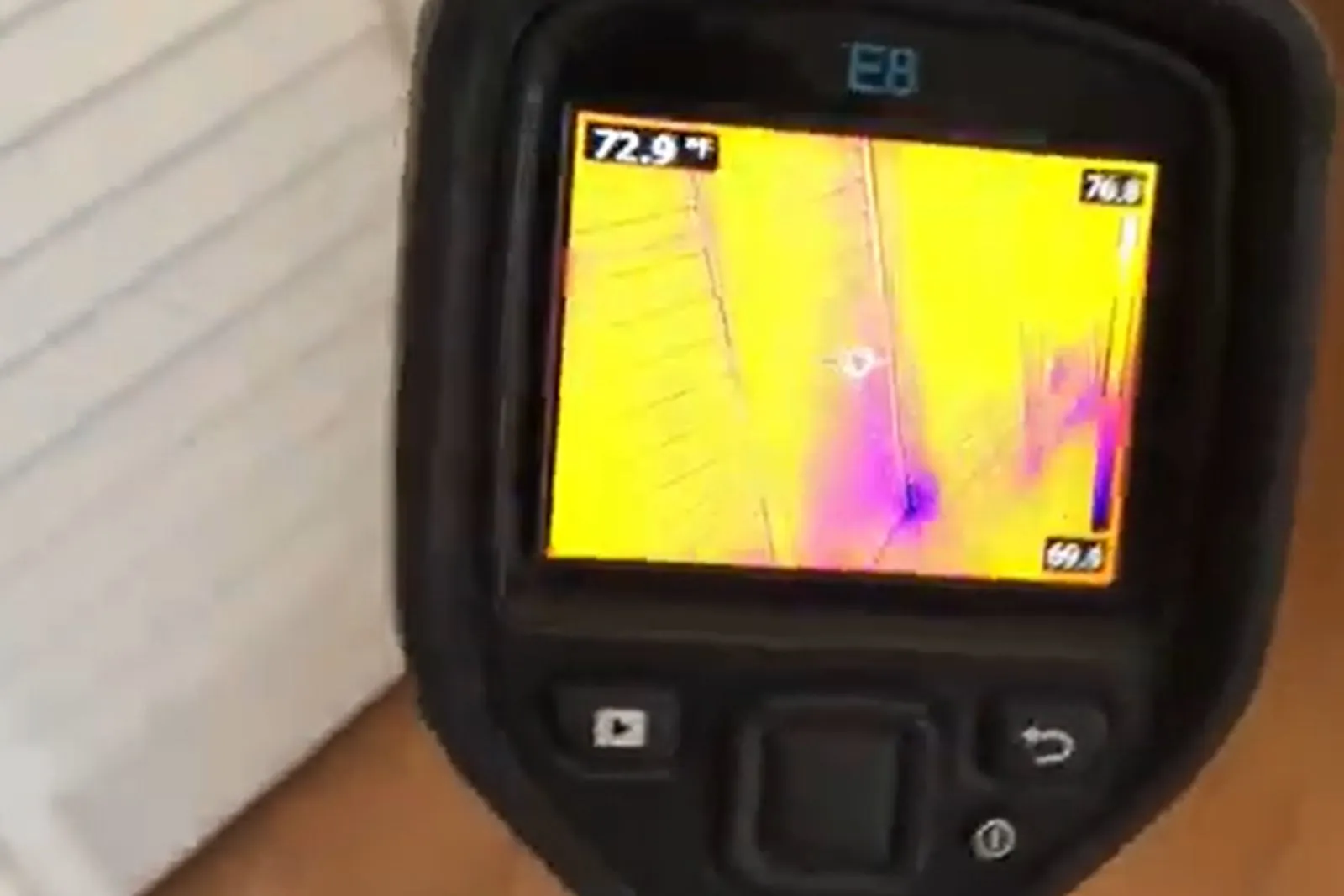
- Listen and look. Acoustic microphones pick up the hiss of pressurized water through floors and walls. Thermal imaging shows hot-water leaks as warm patches.
- Confirm before cutting. Moisture readings confirm the spot. Only then do we recommend opening a wall or floor, and we tell you exactly where and how large.
Plumbing leak detection finds leaks in pressurized supply lines. Slow drain leaks, such as a cracked drain under a shower, are found with dye tests and cameras instead, and we will tell you which approach fits your symptoms.
Where Englewood leaks usually turn out to be
The age of the house points to likely suspects. This is a guide based on the pipe materials common in each era, not a substitute for testing.
| Location | Common in | What usually repairs it |
|---|---|---|
| Threaded galvanized joints in basement ceilings | Homes from the 1940s to early 1960s | Section repair, and a repipe quote if more joints are weeping. |
| Pinholes in copper lines | Homes from the 1960s onward | A cut-out and new section of copper or PEX. |
| Service line under the yard | Any age, especially older galvanized lines | Line repair or replacement from the curb stop to the house. |
| Supply lines under a slab floor | Slab-on-grade additions, garages and townhomes | Spot repair through the slab or a reroute overhead. |
| Toilet flappers and fill valves | Every house | A parts swap, usually the same visit. |
When the leak is under concrete, the job moves to the slab leak detection and repair page. When it is on the buried line to the street, it becomes a water line repair.
What affects the cost of leak detection in Englewood
Detection is quoted separately from the repair, so you know what finding the leak costs before anything is opened.
How many zones to test
A leak confirmed to one bathroom takes far less time than one that could be anywhere in the house or yard.
Indoor versus outdoor
Service line leaks under lawns, driveways or sidewalks can take longer to pinpoint than leaks inside walls.
Access for the repair
Once found, the repair cost depends on what covers the pipe: drywall, tile, concrete or soil.
Pipe material
Galvanized pipe may need more replacement than the leak itself, because neighboring joints are often weak too.
Timing
An active leak with visible water is handled 24/7. A slow, stable leak is cheaper to schedule on a weekday.
Many homeowners policies pay for access to find a covered leak and for the resulting sudden water damage, but not for the leaking pipe itself. Gradual leaks are often excluded. Keep your leak detection report, since insurers usually ask for it.
Want to know what finding your leak will cost? Call (303) 552-3896, day or night.
Leak detection questions in Englewood
Turn off every faucet, appliance and irrigation zone. Find the meter, which in Englewood may be inside the home or in a pit outside, and watch the small leak indicator or the sweep hand for a few minutes. Any movement means water is flowing somewhere.
A newer meter can read more accurately than an old, worn one. If the bill rose after a meter swap, a leak test with everything off shows whether the extra water is real use, a leak, or worth raising with Englewood Utilities.
Not blindly. The point of detection is to open one small area where the leak actually is. We show you the spot and the size of the opening before any cut is made.
Yes, when water is actively coming through a ceiling or wall. The line is answered 24/7 across Englewood. Slow, invisible leaks are better handled in a daytime visit when the house is quiet enough to listen.
Yes. With the owner's authorization we can arrange access, run the tests, and send the findings to the owner or manager, including a note on whether the tenant's fixtures played a part.
Leak detection across Englewood and neighboring cities
We run leak tests in homes and small commercial buildings throughout ZIP codes 80110 and 80113. Newer houses and office buildings in nearby Greenwood Village often have PEX or copper lines buried in finished walls, where acoustic and thermal tools save the most drywall.