Slab Leak Detection & Repair in Englewood, CO
A slab leak is a leak in a water line that runs under a concrete floor. Repair means locating it through the concrete, then either opening a small section of the slab to fix the pipe or abandoning that run and rerouting the line overhead. In Englewood, CO most houses have basements, so slab leaks show up most in slab-on-grade additions, garages, townhomes and basement floors with buried lines.
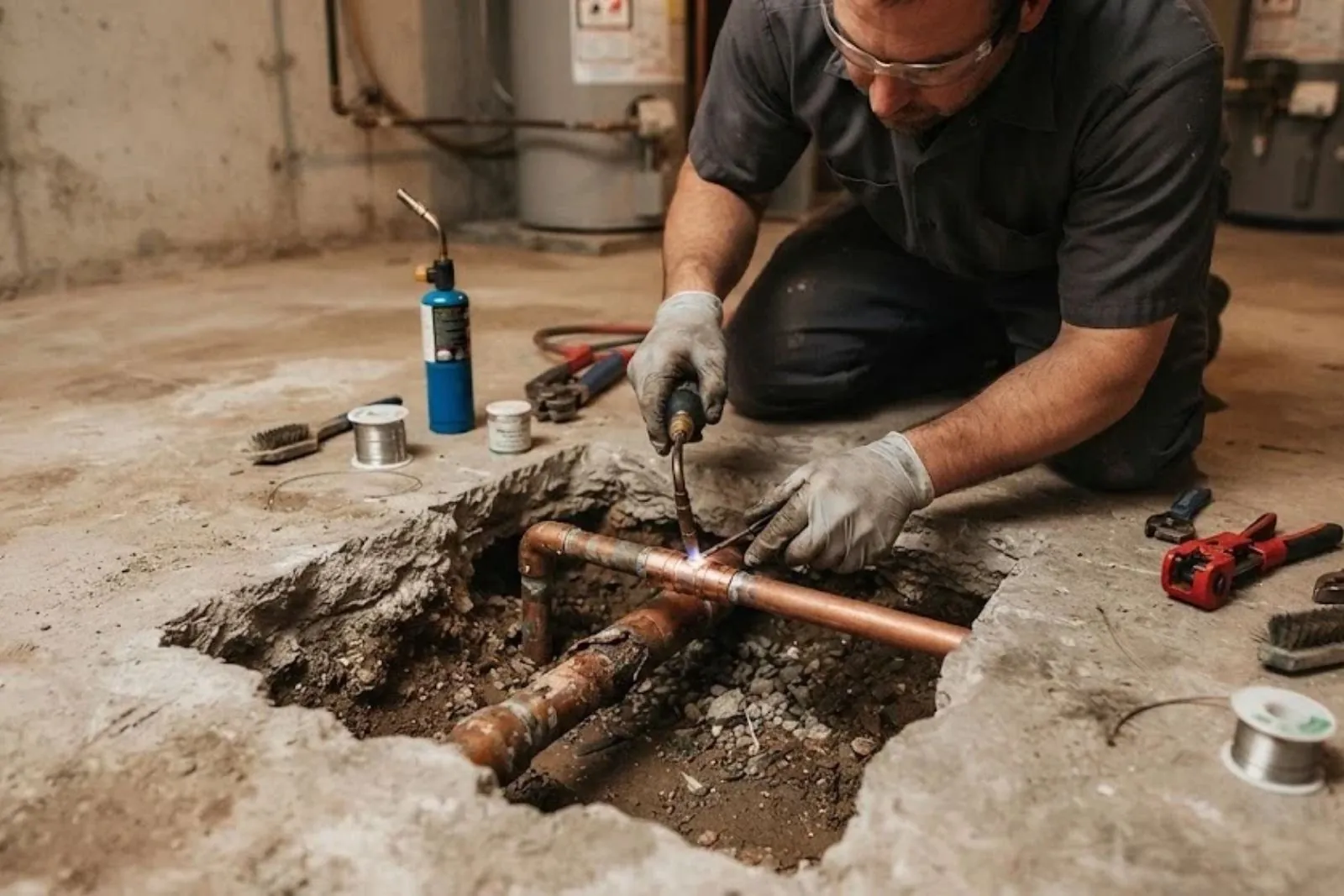
Warm floors, damp edges and a heater that never stops
Slab leaks are hard to see because the concrete hides them. People usually notice one of these first.
- A patch of floor that feels warm under bare feet, usually a hot-water line leaking below.
- Water seeping from the edge of a garage slab or where a slab meets the house foundation.
- The water heater running or cycling far more than usual with no change in use.
- Cracks in tile or flooring that appear alongside dampness.
- A meter that keeps moving when the house is completely shut off.
If you are not sure the leak is under concrete at all, start with general leak detection. Slab repair is a separate method, so the leak's location is confirmed first.
Why slab leaks happen on the Front Range
The Colorado Geological Survey describes Colorado as one of the most severely affected areas in the nation for expansive soils. Clay that swells when wet and shrinks when dry moves concrete, and anything cast into or under it, a little every season.
The IPC (International Plumbing Code) requires pipe passing through or under concrete to be protected against corrosion and physical damage, which is why sleeving and wrapping matter.
Pipes under a slab are held tight by the concrete and soil around them. As the ground shifts, lines can rub against rebar or gravel, joints can be strained, and hot-water copper can wear through at the point where it expands and contracts. The soil under a given Englewood house varies, so we treat soil movement as a likely factor rather than a certainty.
In Englewood, slab leaks tend to show up where concrete sits directly on the ground. Typical spots are a slab-on-grade addition to an older house or an attached garage with a line to a utility sink. Townhomes and basement floors with a buried supply line are the other usual suspects.
Spot repair or reroute: comparing the options
Once the leak is located, there are two real choices. The right one depends on how old the rest of the under-slab pipe is and what sits on the floor above.
| Option | How it works | Best when |
|---|---|---|
| Spot repair through the slab | A small section of concrete is cut out, the pipe is repaired, and the slab is patched. | The pipe is otherwise sound and the floor above is easy to patch. |
| Reroute overhead | The leaking under-slab run is abandoned and a new line is run through walls or ceilings. | The line has leaked before, or tile and cabinets make breaking the floor costly. |
| Full under-slab repipe | All supply lines under the slab are replaced or rerouted. | Several leaks have occurred and the whole system is the same age. |
A reroute usually avoids concrete work entirely, and new PEX is flexible enough to follow a practical path. For homes with repeated leaks across the whole house, a full whole-home repipe may cost less than repairing leaks one at a time.
Water coming up through a floor?
Shut off the main and call. We answer 24/7 and can confirm the leak before anything is broken out.
What to do if water is coming up through a floor
Visible water from a slab is uncommon, but when it happens it needs quick, safe steps.
- Close the main water shutoff to stop the flow feeding the leak.
- If the leak is on the hot side, turn a gas water heater to pilot or switch off an electric one at the breaker.
- Keep extension cords, power strips and electronics away from wet floors.
- Lift rugs and move furniture off wet flooring to limit damage.
- Note where the water appears first, since it helps pinpoint the leak.
How a slab leak is found without guesswork
- Pressure test. Hot and cold lines are tested separately to confirm which one is leaking under the slab.
- Acoustic listening. Ground microphones pick up the sound of water escaping through the concrete, strongest directly above the leak.
- Thermal imaging. A hot-water leak warms the floor above it, which a thermal camera can map.
- Line tracing. The pipe route is traced so the repair opening lands on the pipe, not beside it.
You see the marked spot before any cut. A typical access opening is about the size of a large floor tile.
What drives the price of slab leak repair
Slab work is quoted after the leak is located, because the finish above the pipe often costs more than the pipe itself.
Floor finish
Bare garage concrete is simple to patch. Tile, hardwood or cabinets above the leak add cost.
Repair or reroute
A reroute avoids concrete work but needs a clear path through walls and ceilings.
Hot or cold line
Hot-water slab leaks are more common and can affect the water heater if left running.
Number of leaks
A second leak on the same line often tips the decision toward a reroute.
After-hours response
Visible water on a floor is handled 24/7 and carries after-hours rates.
Many homeowners policies pay to break out and restore the slab to reach a covered leak, and the sudden water damage it caused, but not the pipe repair itself. Policies vary widely on slab leaks, so call your insurer early.
Want a real number for your slab leak? Call (303) 552-3896, day or night.
Slab leak questions in Englewood
Yes. Basement floors are concrete slabs too, and some older homes have supply lines buried under them to reach a laundry area, a floor sink or a bathroom added later.
If it is the first leak on otherwise sound pipe under an easy-to-patch floor, a spot repair is often best. If the line has leaked before or the floor is tile or hardwood, a reroute usually makes more sense.
A slow slab leak can run for weeks, raising bills and softening the soil under the slab. Water visibly coming up through a floor is urgent, so shut off the main and call. We answer 24/7.
Water saturating the soil under a slab is never good for the concrete above it, especially on expansive clay. Finding and stopping the leak early is the best protection. Foundation repair itself is a structural job we can refer you out for.
It depends on the HOA's documents, which say whether lines under a unit's slab belong to the owner or the association. Check them before the repair so the invoice goes to the right party. We can provide a written report of where the leak was found.
Slab leak repair in Englewood and nearby
We locate and repair slab leaks in ZIP codes 80110 and 80113, including garage slabs behind older bungalows and townhome floors near CityCenter. Townhome and slab-on-grade construction is common in nearby Centennial, and we handle slab leak calls there the same way.