Switching From a Gas Water Heater to a Heat Pump Model in Englewood
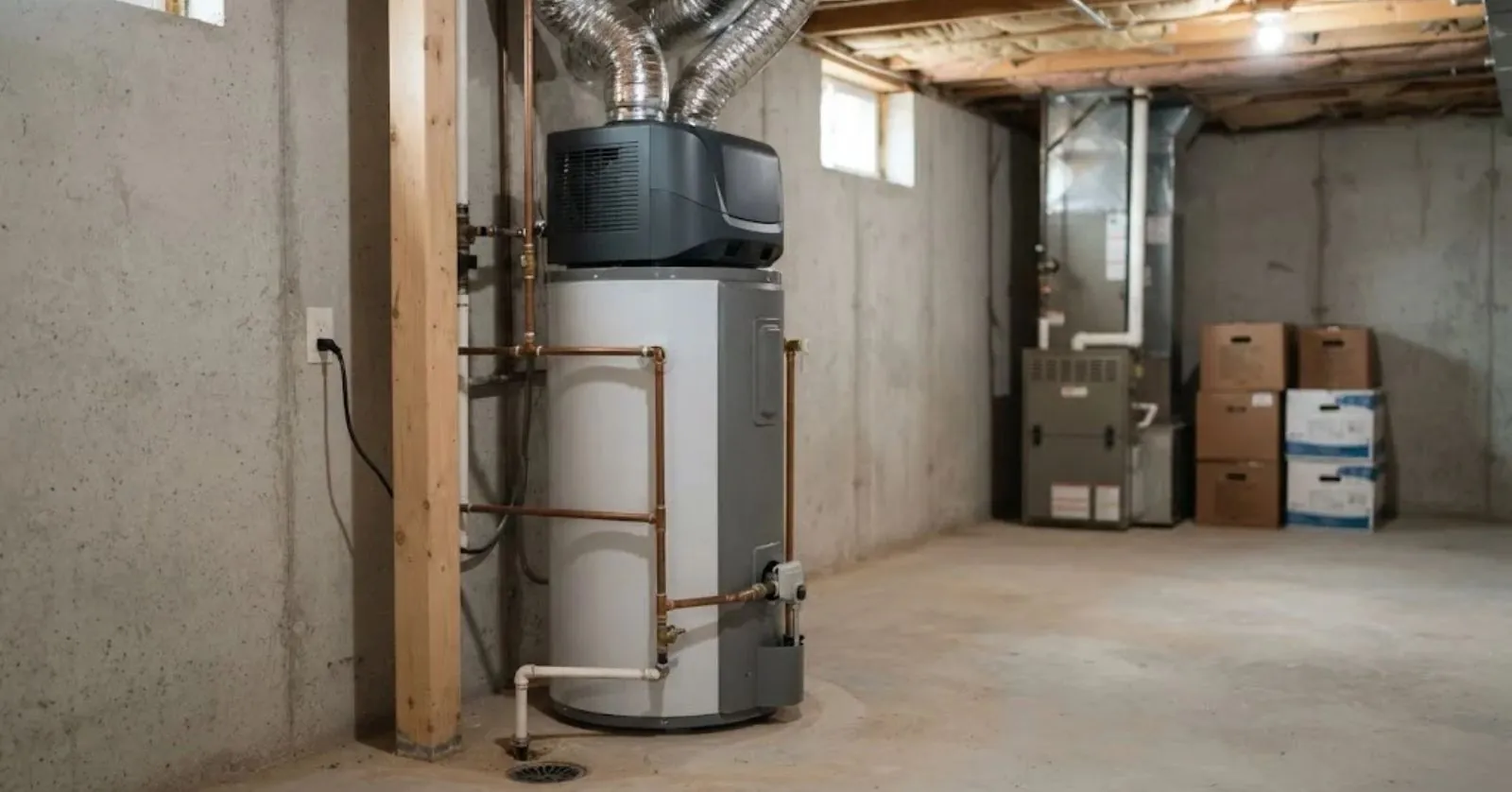
Heat pump water heaters have become a common replacement option when a gas tank wears out. They can use far less energy than a standard electric tank, and many Englewood homes have a basement that suits them well. They also come with trade-offs that a straight gas-for-gas swap does not. This guide covers what to check before you decide.
How a heat pump water heater works
A heat pump water heater works like a refrigerator in reverse. A fan pulls in air from the room, a compressor and refrigerant move heat from that air into the water tank, and the cooled air is released back into the room.
Because it moves heat rather than creating it, it can use much less electricity than a conventional electric tank to heat the same water. Most models also include backup electric elements for periods of heavy demand, and let you choose between efficiency and faster recovery.
Before you buy: questions to answer
These questions decide whether a heat pump model fits your house.
- Is there enough space? Manufacturers specify a minimum room size or airflow, and a small closet may need louvered doors or ducting.
- How warm is the space in winter? Efficiency drops in cold rooms, and each model lists an operating air temperature range.
- Is there a nearby drain? The unit produces condensate that needs to go somewhere.
- What electrical service is available? Many models need a dedicated 240-volt circuit.
- Will the noise matter? The fan and compressor are about as loud as a refrigerator or quiet dishwasher.
Why Englewood basements often suit them
Many Englewood homes built after World War II have full basements with the water heater already there. Basements tend to have more room than utility closets and stay within a moderate temperature range, which helps the heat pump run efficiently.
The unit's cool exhaust air is often welcome in a basement in summer and noticeable in winter. If the basement is finished living space, plan the location so the cooler air and fan noise do not bother anyone.
Unlike gas appliances, a heat pump water heater has no burner, so Englewood's 5,348-foot elevation does not reduce its output the way it can for gas models. It also removes the need for a flue, which can solve the problem of an orphaned water heater left alone in an old chimney.
Old gas water heater near the end?
Plan the switch before it fails, so you are not choosing under pressure. Call for a free estimate.
Gas tank versus heat pump at a glance
These are general comparisons. Specific models vary.
| Factor | Gas tank | Heat pump |
|---|---|---|
| Upfront cost | Lower. | Higher. |
| Operating energy | Burns natural gas. | Uses electricity efficiently. |
| Venting | Needs a flue or vent. | No combustion venting. |
| Space needs | Compact. | Needs air volume around it. |
| Recovery speed | Fast. | Slower in efficiency mode, faster with backup elements. |
| Effect on the room | Minimal. | Cools and dehumidifies the space. |
What the installation involves
Replacing a gas tank with a heat pump model usually means capping the gas line to the old heater, adding or upgrading an electrical circuit, running a condensate drain, and closing off the old vent connection. A plug-in 120-volt model can avoid new wiring in some homes, but it typically recovers more slowly.
The water side is similar to any tank replacement. A relief valve for temperature and pressure, required by the IPC (International Plumbing Code), still needs a proper discharge pipe, and an expansion tank may be needed where the home has a pressure reducing valve. Water heater replacement is permitted work, so the permit and inspection are part of the job.
Permit and code items for any replacement are listed on our water heater installation page.
Sizing a heat pump water heater
Heat pump water heaters are usually sold in 50, 65 and 80 gallon sizes. Because they recover more slowly in their most efficient mode, many households choose one size larger than their old gas tank, especially if several people shower in the morning.
The number to compare between models is the first-hour rating, which estimates how much hot water the heater can deliver in a busy hour. Match it to your household's peak use rather than tank size alone.
Recovery matters most in winter, when incoming water is coldest and the heat pump is drawing heat from a cooler basement. If your household regularly runs back-to-back showers on winter mornings, look at the model's high-demand or hybrid mode, which brings the backup elements in to keep up.
What to do to keep one running well
Heat pump models need a little more routine care than a gas tank.
- Clean the air filter on the schedule in the manual, often every few months.
- Check that the condensate line drains freely and is not kinked or clogged.
- Flush sediment from the tank once a year, as with any tank heater.
- Have the anode rod inspected every few years.
- Keep storage and laundry clear of the air intake and exhaust.
Incentives and rebates
Utility rebates and federal tax incentives for heat pump water heaters have changed several times in recent years. Before buying, check Xcel Energy's current residential rebate list and the current status of any federal tax credit, and keep the model number and receipts in case a rebate applies.
Do not choose a model based on an incentive alone. A unit that does not fit your space or electrical service will cost more over time than any rebate saves.
Utility rebates often require a qualifying model from an approved list and an application within a set time after installation. Ask for an itemized invoice showing the model number, installation date and address, since rebate programs usually ask for exactly those details.
When gas still makes sense
A heat pump model is not right for every home. Very small utility closets, spaces that get very cold in winter, homes without room for a new circuit, and households that need very fast recovery may be better served by a new gas tank or a gas tankless unit.
If you are weighing tankless as well, the way on-demand units are kept up on Englewood water is laid out under tankless water heater service. If your current heater is simply acting up, water heater repair may buy time to plan the switch properly.
Newer homes in Centennial often keep the water heater in a garage, which changes the space and temperature questions above.
Sources
- U.S. Department of Energy, heat pump water heater guidance.
- Xcel Energy Colorado, residential rebates for water heating.
- Manufacturer installation manuals, space and operating temperature requirements.
This guide is general information for Englewood-area property owners, not a substitute for an on-site inspection. Utility programs and rules change, so confirm details with the agency named.