Grease, Garbage Disposals and Sewer Backups: A Kitchen Guide for Englewood
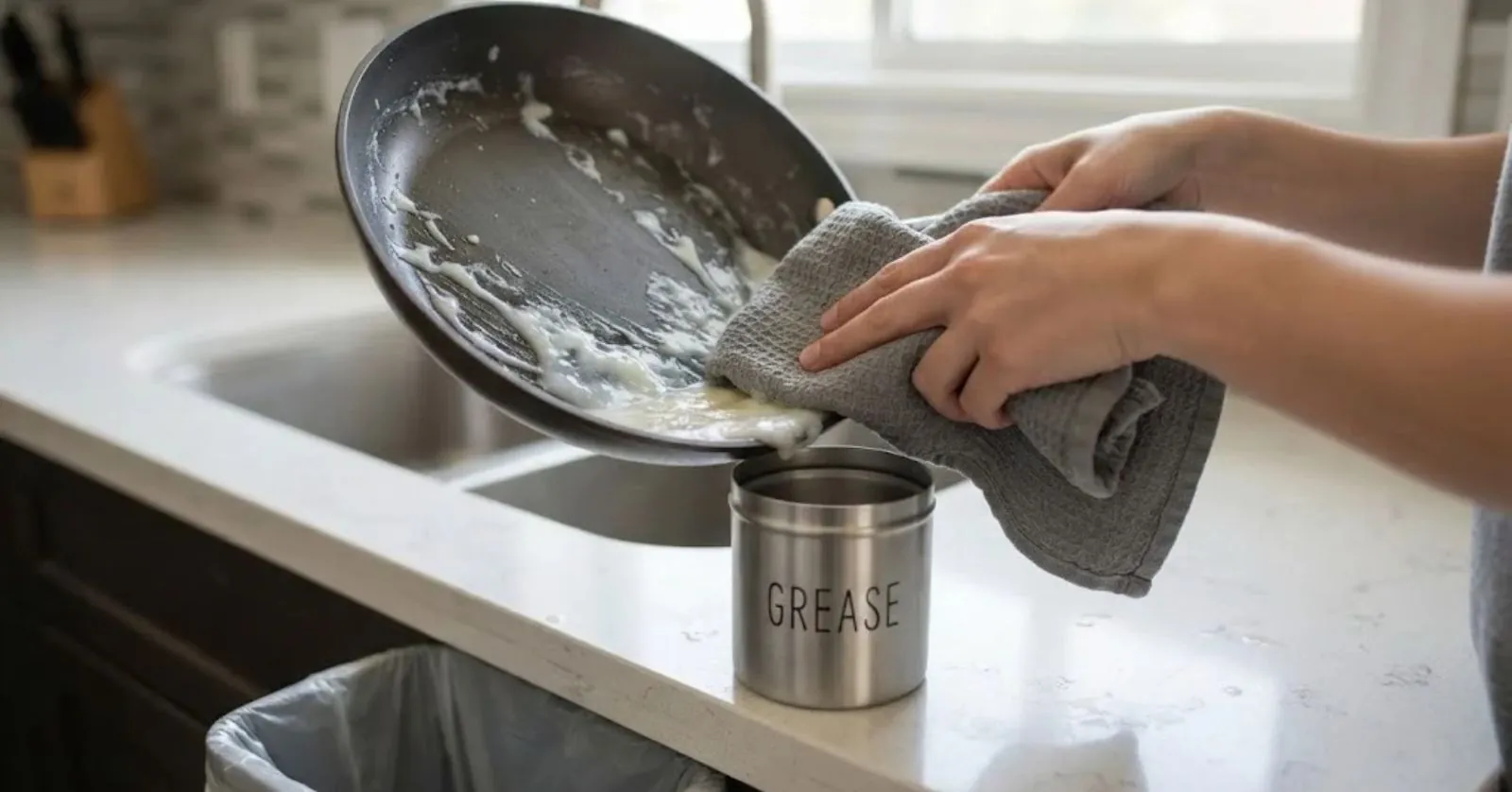
Grease is one of the most common reasons an Englewood kitchen drain slows down or a main line backs up, and it is almost entirely preventable. It goes down the drain as a warm liquid and comes back as a solid problem. This guide explains what happens to grease in the pipes, which kitchen habits cause the most trouble, and how a grease-clogged line is cleared.
What grease does inside a pipe
Fats, oils and grease are liquid when warm. As they travel through a cooler drain pipe, they cool, thicken and stick to the pipe wall. Each time more grease goes down, the coating builds. Food particles, coffee grounds and paper catch on the sticky layer, and the pipe gradually narrows.
Older Englewood homes are more vulnerable because many have cast iron drains. Cast iron develops a rough interior surface over decades, which gives grease more to cling to than smooth plastic pipe.
Once grease reaches the main line and the sewer lateral, it combines with roots and debris. That is when a slow kitchen sink becomes a basement floor drain backup.
What not to put down the kitchen drain or disposal
These are the items that cause the most kitchen line and disposal problems.
- Cooking oil, bacon fat, butter and meat drippings, even in small amounts.
- Coffee grounds, which settle and pack in the line.
- Rice and pasta, which swell with water.
- Fibrous vegetables such as celery, corn husks and onion skins.
- Eggshells, bones and fruit pits.
- Paper towels and wipes, including ones labeled flushable.
Myths that keep grease going down the drain
Running hot water with grease does not clear it. It only carries the grease a little farther before it cools and sticks, often into the part of the line that is harder to reach.
Dish soap breaks grease into smaller droplets, but those droplets still cool and recombine downstream. Soap helps clean dishes, not pipes.
Bleach and chemical drain openers are not a fix either. South Englewood Sanitation District No. 1 warns that bleach can harden grease, and caustic cleaners can damage older pipes and endanger whoever opens the line next.
Kitchen sink backing up?
Stop using the sink and dishwasher, and call. We clear kitchen lines 24/7.
Better habits, and why they work
Small changes in the kitchen prevent most grease problems.
| Habit | Why it helps |
|---|---|
| Wipe greasy pans with a paper towel before washing. | Keeps most grease out of the drain entirely. |
| Pour cooled grease into a lidded container and throw it away. | Grease goes to the trash instead of the sewer. |
| Use a sink strainer. | Catches food particles that stick to grease. |
| Run cold water when using the disposal. | Keeps any fat solid so the disposal can chop it and move it along. |
| Take large amounts of cooking oil to a takeback event. | South Platte Renew runs an annual grease takeback program. |
Holidays are peak grease season
The days after big holiday meals are a known busy time for kitchen line calls. Roasting pans, turkey fryers and extra dishes put more grease down drains in a few days than a household usually sends in months, and houses with guests run more water through already-narrowed lines.
Before a big meal, run the dishwasher and disposal ahead of time rather than all at once, keep a container by the stove for grease, and avoid putting peels and scraps down the disposal. If a sink starts draining slowly, stop using it before it backs up into the dishwasher.
Signs grease is building up in your line
Grease rarely causes a sudden clog out of nowhere. These are the early warnings.
- The kitchen sink drains more slowly each month, even after plunging.
- Gurgling from the kitchen drain when the dishwasher empties.
- A sour or rancid smell from the sink that returns after cleaning.
- Water backing up into the other side of a double sink when the disposal runs.
- A floor drain or basement fixture that gurgles when the kitchen drains.
Apartments and shared kitchen lines
In apartment and condo buildings, several kitchens often share one drain stack. Grease from one unit can build up in a section that serves several others, which is why a backup may appear in a lower unit even though the grease came from above.
Building owners and HOAs benefit from scheduled cleaning of shared kitchen stacks and clear guidance to residents about grease. When a shared line backs up, a camera run helps show where the buildup is and whether it is spread through the line or concentrated at one point.
How a grease-clogged line is cleared
A drain cable can punch a hole through a grease clog and restore flow for a while, but it leaves most of the grease stuck to the pipe wall. The line narrows again quickly. That is why kitchen lines that clog repeatedly are better served by hydro jetting, which scours the full pipe wall with high-pressure water.
A camera inspection before and after shows how much grease was in the line and whether roots or damage are adding to the problem. A one-time clog rarely needs more than regular drain cleaning.
If the disposal itself is jammed, leaking or worn, it is covered on our garbage disposal repair page.
What a camera shows in a greasy line
On camera, a grease-coated line looks narrowed and lumpy, often with white or yellowish buildup along the top and sides of the pipe. Food and debris stick to it in clumps, and in older cast iron, the buildup mixes with rust scale.
After jetting, the same pipe usually shows a much cleaner wall. That before-and-after view is useful for deciding how often a line needs maintenance, and for seeing whether there is also a crack, a sag or roots that grease had been hiding. Keep the footage with your home records so future cleanings can be compared against it.
For restaurants and commercial kitchens
Commercial kitchens produce far more grease than homes, and the IPC (International Plumbing Code) calls for grease interceptors where that waste is produced. An interceptor only works if it is cleaned on schedule, and a full one lets grease pass straight into the sewer.
Englewood restaurants along South Broadway and elsewhere typically pair interceptor service with scheduled jetting of kitchen lines to avoid backups during service. Our commercial plumbing page covers that work.
Restaurant and hotel kitchens in the Tech Center side of Greenwood Village deal with the commercial version of this problem daily.
Sources
- South Englewood Sanitation District No. 1, fats, oils and grease guidance.
- South Platte Renew, annual grease takeback program.
- International Code Council, International Plumbing Code grease interceptor requirements.
This guide is general information for Englewood-area property owners, not a substitute for an on-site inspection. Utility programs and rules change, so confirm details with the agency named.