Frozen Pipe Repair in Englewood, CO
Frozen pipe repair means safely thawing a water line that has frozen solid, then checking it and repairing any split before water pressure returns. In Englewood, CO it is a winter emergency. A frozen line that thaws on its own can spray water from a crack you did not know was there, so it pays to act while the pipe is still frozen.
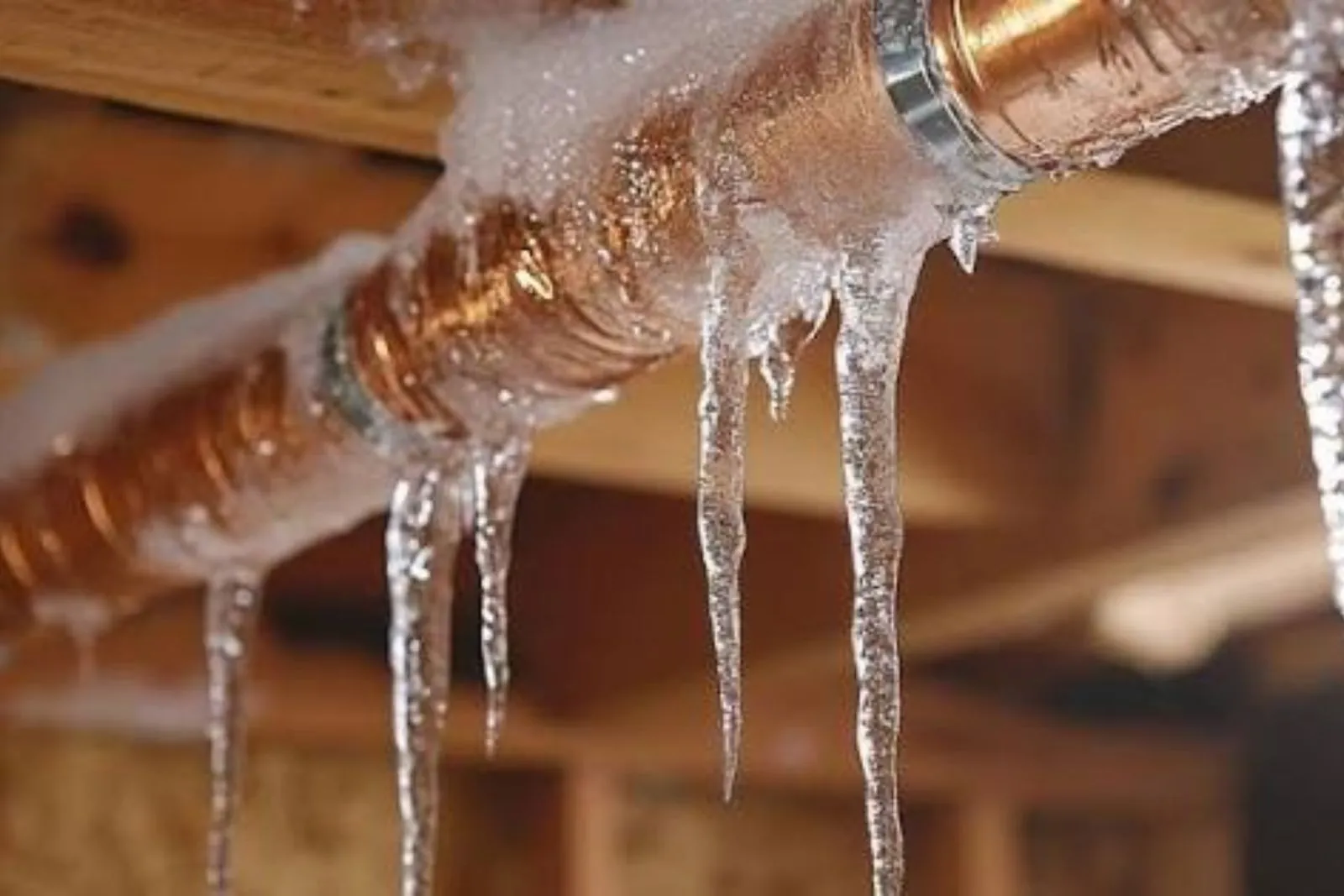
Safe steps while you wait
Most frozen-pipe damage happens during the thaw, not the freeze. These steps limit it.
- Keep the affected faucet open so meltwater and pressure have somewhere to go.
- If you see frost, bulging or a crack on the pipe, close the main shutoff before it thaws.
- Turn the thermostat up and prop open the sink cabinets that sit against outside walls.
- Warm a reachable pipe gently with a hair dryer or space heater kept well away from anything flammable.
- Never use a torch, open flame or charcoal heater. They cause fires and can burst the pipe.
Englewood cold, and where it finds pipes
Front Range cold can arrive in hours. On December 21, 2022, the National Weather Service recorded the temperature at Denver International Airport falling 37 degrees in one hour, and the low the next morning reached 24 below zero. A house that is fine on a normal winter night can freeze pipes in a snap like that.
The IPC (International Plumbing Code) does not allow water pipe in exterior walls, attics or crawlspaces where it can freeze unless it is protected, but many older houses were plumbed long before current rules.
In Englewood's post-war bungalows, the usual trouble spots are kitchen supply lines in exterior walls, lines running through an unheated attached garage, crawlspaces under additions, and outdoor hose bibs. Houses heated by an older boiler can also freeze pipes if the boiler fails overnight, which our boiler repair page covers.
No water on a sub-zero morning?
Do not use a torch or open flame. Call and we will thaw it safely and check for splits.
Where pipes freeze, and how to protect each spot
Prevention is cheap compared with a burst. These are the most common spots and the fix for each.
| Trouble spot | Why it freezes | Prevention |
|---|---|---|
| Kitchen sink on an outside wall | Little insulation in older exterior walls. | Open the cabinet and let a faucet drip on the coldest nights. |
| Hose bib | Water sits in the pipe right at the outside wall. | Disconnect hoses and install a frost-free sillcock. |
| Lines in an attached garage | Unheated space with a big door. | Insulate lines and keep the door closed. |
| Crawlspace under an addition | Cold air through vents and gaps. | Seal vents in winter and insulate exposed pipe. |
| Pipes near a failed heater | No heat reaches that part of the house. | Service the boiler or furnace before winter. |
How a frozen pipe is thawed and repaired
- Find the frozen section. We trace from the fixture that has no water back to the cold spot, often an exterior wall or garage run.
- Protect the house. If a split is likely, the main stays off during thawing so water cannot escape.
- Thaw safely. The section is thawed with controlled heat, such as a pipe thawing machine or targeted warm air, never an open flame.
- Check for damage. With the line thawed, the pipe is inspected and pressure tested for splits.
- Repair and prevent. Any split section is replaced, and we suggest insulation, rerouting or heat tape where it will actually help.
If a pipe has already split and water is spraying, the job becomes a burst pipe repair, and the first step is closing the main.
What affects the cost of frozen pipe repair
Frozen pipe calls cluster on the coldest nights, and the final cost depends on what the thaw reveals.
Access to the frozen line
A line in an open basement or garage is quick to reach. One inside a finished wall may need an opening.
Split or no split
A line that thaws without damage costs far less than one that needs a section replaced.
Number of frozen runs
A deep cold snap can freeze several lines in the same house.
Timing
Most calls come overnight or early morning during a cold snap, and after-hours rates apply.
Prevention work
Insulation, frost-free hose bibs and rerouting lines away from cold walls cost less than the next repair.
Damage from a pipe that froze and burst is covered by many policies, provided the home was reasonably heated. Damage in a home left unheated is often excluded, so keep the heat on when you travel.
Want a real number before we start? Call (303) 552-3896, day or night.
Frozen pipe questions in Englewood
A faucet that gives only a trickle or nothing at all on a very cold morning, while other faucets work, is the classic sign. Frost on an exposed pipe or a bulge in the pipe confirms it.
On the coldest nights, a slow drip at a faucet on an exterior wall relieves pressure and keeps water moving. It uses a little water and can prevent a costly burst.
Gentle heat from a hair dryer or a space heater kept at a safe distance is fine on an exposed pipe. Never use a torch or open flame, and close the main first if you see a crack.
Yes. Frozen pipe calls are answered 24/7 across Englewood, and they spike during cold snaps.
A frost-free sillcock keeps the shutoff inside the heated wall, which prevents most hose bib freezes. It only works if the hose is disconnected in the fall.
Frozen pipe service in Englewood and nearby
We thaw and repair frozen lines throughout ZIP codes 80110 and 80113 every winter, mostly in exterior walls, garages and crawlspaces of older homes. Newer homes in nearby Centennial freeze less often, but hose bibs and garage lines still catch people out in a sudden cold snap.