Water Softener Installation & Repair in Englewood, CO
Water softener installation adds a system that removes calcium and magnesium, the minerals that make water hard, before they reach your fixtures and appliances. Repair covers softeners that stop regenerating or let hard water through. In Englewood, CO the city is working to reduce hardness, so a water test is the right first step before sizing one.
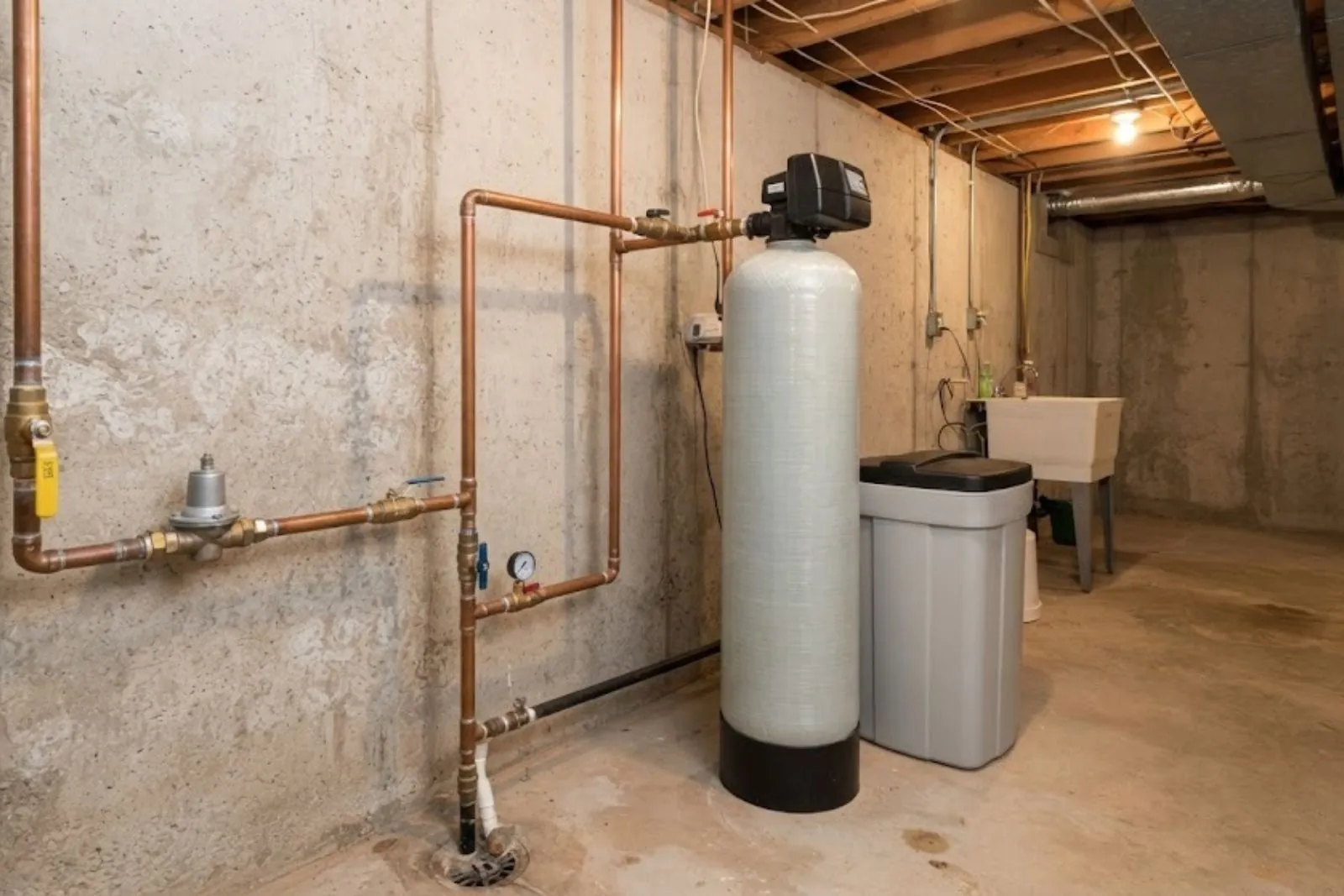
White crust, spotty glasses and short-lived heaters
People usually notice hard water before they ever search for a softener. These are the signs.
- White or crusty buildup on faucets, showerheads and glass doors.
- Water heaters or tankless units that rumble or throw scale-related codes.
- Soap and shampoo that do not lather well.
- Spots on dishes and glassware after the dishwasher runs.
- Aerators and showerheads that clog with mineral flakes.
These signs suggest hard water, but a test confirms it. Softener sizing depends on the measured hardness and your household's water use.
Englewood water and hardness
Englewood treats its own water at the Allen Water Treatment Plant, using water from City Ditch and the South Platte River. The city has an active program aimed at improving the water's taste, odor and hardness. That makes hardness a moving target, and it is one reason we test your water rather than quote a number from a website.
Scale from hard water collects wherever water is heated. It settles in tank water heaters and coats the heat exchanger in tankless units, which is why softened water can reduce how often our tankless water heater service is needed.
A softener does not remove lead or make water safer to drink. If lead is your concern, our water filtration page covers filters certified for that.
Softener options compared
Not every household needs the same system. These are the main choices.
| Option | How it works | Trade-offs |
|---|---|---|
| Salt-based ion exchange softener | Swaps hardness minerals for sodium or potassium. | Removes hardness fully, but needs salt refills and a drain. |
| Salt-free conditioner | Changes minerals so they scale less. | No salt or drain, but does not remove hardness. |
| Dual-tank softener | Two tanks alternate so soft water is always available. | Higher cost, suited to high-use households. |
Softener capacity is sized from your hardness level and daily water use. An oversized unit wastes salt and an undersized one runs out of soft water.
Tankless heater scaling up every year?
Softened water can stretch the time between descaling visits.
How a softener installation works
- Test the water. We measure hardness and look at your household's typical water use.
- Choose the location. Softeners usually go near the main shutoff, with room for salt and access to a drain.
- Install with a bypass. A bypass valve lets you supply unsoftened water during maintenance.
- Program and test. The regeneration schedule is set for your hardness and use, and softened water is tested.
Outdoor hose bibs are often left on unsoftened water so salt is not wasted on irrigation. The IPC (International Plumbing Code) treats the softener's regeneration water as indirect waste, so its drain line ends at an air gap or air break rather than connecting directly to the sewer.
Softener upkeep that prevents most repair calls
Most softener problems we see are maintenance issues rather than broken parts. Salt can form a hard crust, called a bridge, above the water in the brine tank. The softener then cannot make brine, stops regenerating properly, and hard water passes straight through.
Checking the salt level monthly and breaking up any crust with a broom handle prevents that. It also helps to use clean pellet salt rather than rock salt, to confirm the clock is correct after a power outage, and to have the injector and control valve checked every few years. Resin beds last many years, but they wear out faster with heavy iron or chlorine in the water.
What affects the cost of a water softener
Softener pricing depends on the system and the installation location.
System type and capacity
Larger and dual-tank systems cost more than a basic single-tank unit.
Installation location
A basement near the main shutoff is simplest. Other locations may need more piping.
Drain access
Salt-based softeners need a drain for regeneration water.
Repair versus replacement
Control valve and resin issues may be repairable on a newer unit.
Ongoing costs
Salt, occasional service and eventual resin replacement are part of ownership.
Water softeners are not covered by homeowners insurance. Some manufacturers offer long warranties on tanks, so keep the paperwork.
Want a real number for a softener? Call (303) 552-3896, day or night.
Water softener questions in Englewood
It depends on your preferences and your appliances. The city is working to reduce hardness, so a test at your tap gives you a real number to decide with.
No. Softeners remove hardness minerals. Lead removal needs a filter certified for lead, which is a different product.
Yes, it reduces how fast scale builds on the heat exchanger. Many owners can descale less often with softened water.
It depends on hardness, water use and tank size. Many households add salt every one to two months.
Often yes. Common problems include a failed control valve, a clogged injector or a salt bridge in the brine tank.
Softener installation in Englewood and nearby
We install and repair softeners in homes across ZIP codes 80110 and 80113, usually in basements near the main shutoff. Homes in nearby Centennial are served by different water providers, so we test the water there before recommending a system too.