Winterizing Pipes and Hose Bibs Before an Englewood Cold Snap
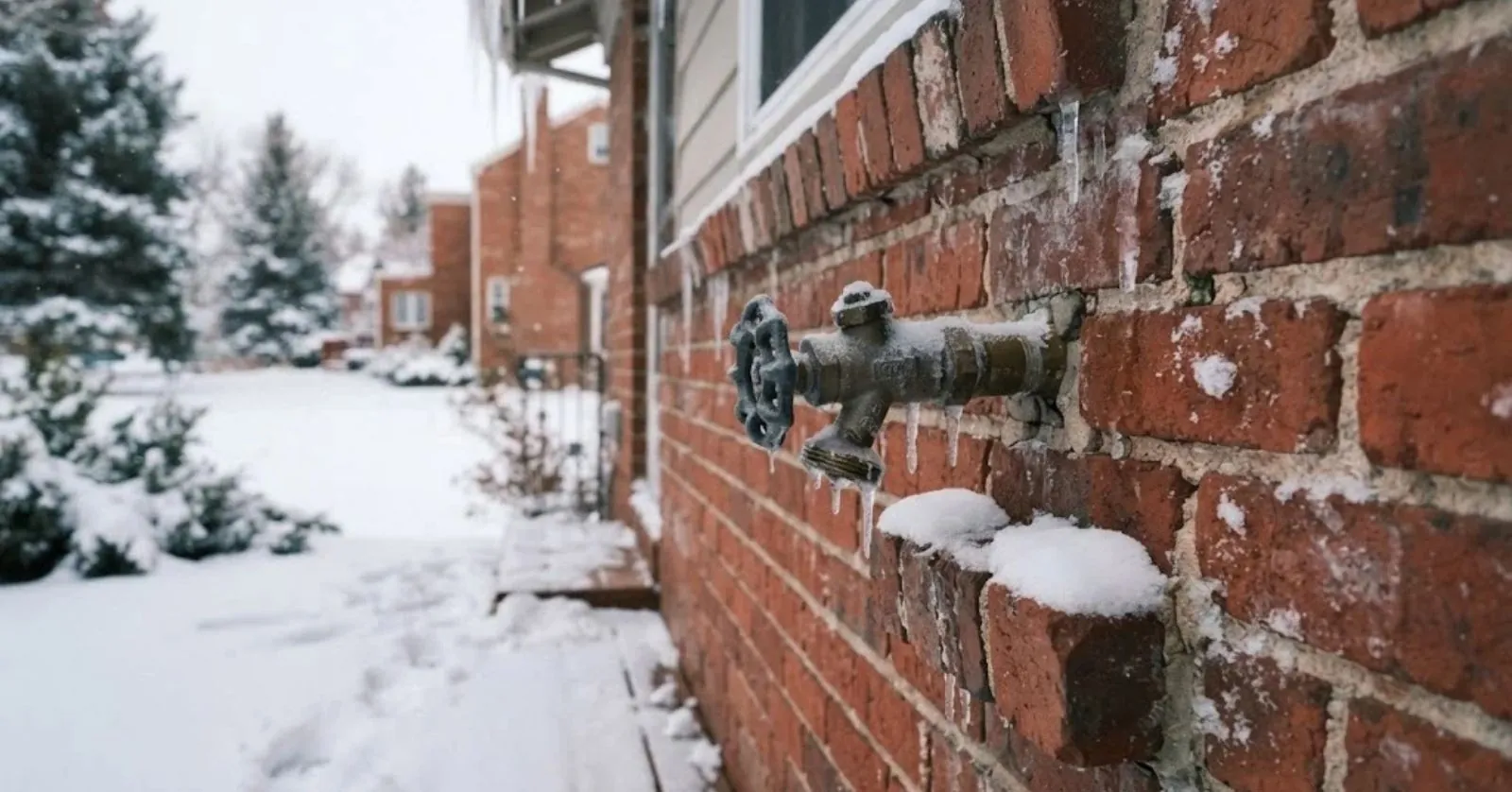
Front Range winters are mild most of the time, which is exactly why frozen pipes catch people off guard. A sunny 50-degree week can turn into a subzero night with little warning. This guide is a fall checklist for Englewood homes, built around where pipes actually freeze in local houses and what you can do in an afternoon to prevent it.
What the December 2022 cold snap showed
On December 21, 2022, an Arctic front moved across the Denver area. The National Weather Service recorded the temperature at Denver International Airport falling 37 degrees in a single hour, and the next morning's low was 24 below zero. Calls for frozen and burst pipes followed across the metro.
The lesson was not that Colorado winters are always extreme. It was that the swing can be fast enough that there is no time to prepare once the forecast arrives. Winter prep belongs in October, not the night before a storm. A short list done every fall, the same way you change smoke alarm batteries, removes most of the guesswork.
What to do before the first hard freeze
These tasks take an afternoon and prevent most freeze damage.
- Unscrew each garden hose from its outdoor faucet and let the hoses drain.
- Close any indoor shutoff valves that feed outdoor faucets, then open the outdoor faucet to drain it.
- Have the irrigation system blown out with compressed air and protect the backflow device.
- Insulate exposed pipes in the garage, crawlspace and any unheated room.
- Find the main water shutoff and make sure it turns freely.
- Seal gaps where cold air reaches pipes, such as around sill plates and dryer vents.
Hose bibs: the most common freeze in Englewood
Outdoor faucets freeze more than any other fixture because the pipe runs right through the exterior wall. Many older Englewood houses still have standard hose bibs, where the valve sits at the outside wall and water stays in the pipe all winter.
A frost-free sillcock moves the valve several inches inside the heated wall, so the section that could freeze drains when the faucet is closed. It only works if the hose is removed. A hose left attached traps water in the sillcock, which can split inside the wall and leak unnoticed until spring.
Current code also calls for backflow protection on hose connections, usually a small vacuum breaker built into or screwed onto the faucet. The IPC (International Plumbing Code) includes that requirement to keep garden hose water from siphoning back into the drinking supply.
Pipe already frozen?
Leave the faucet open, do not use a flame, and call. We respond 24/7 during cold snaps.
Where pipes freeze in Englewood houses
These are the usual trouble spots, roughly in order of how often they cause problems.
| Location | Why it freezes | Fall prevention |
|---|---|---|
| Outdoor hose bibs | Pipe runs through the exterior wall. | Remove hoses, drain, or install frost-free sillcocks. |
| Kitchen sink on an outside wall | Thin insulation in older walls. | Open cabinet doors and drip the faucet on the coldest nights. |
| Pipes in an attached garage | Unheated space with a large door. | Insulate lines, keep the door closed. |
| Crawlspaces under additions | Cold air through vents and gaps. | Close vents for winter, insulate pipes. |
| Irrigation and backflow devices | Above ground and fully exposed. | Blow out the system and insulate the device. |
Irrigation systems and backflow devices
Sprinkler systems are among the most expensive freeze repairs because the parts sit above ground and are full of water. The backflow device, usually near the house where the irrigation line leaves the main supply, is the most vulnerable piece.
Winterizing means closing the irrigation shutoff, blowing water out of the lines and heads with compressed air, and draining or insulating the backflow device. It is best done before the first hard freeze, typically in October along the Front Range. Englewood's commercial and multifamily properties must also certify their backflow assemblies each year, as explained on our backflow testing page.
Garages and crawlspaces
Attached garages in older Englewood houses were often added after the original construction, with water lines run along exterior walls to reach a utility sink, a washer or a hose bib. Those lines sit in the coldest part of the house.
Pipe insulation helps, but keeping the garage door closed on cold nights matters more. In crawlspaces under additions, closing foundation vents for the winter and sealing gaps around the rim joist stop the cold drafts that freeze pipes.
Travel and vacant homes
Setting the thermostat very low while away invites trouble, because interior walls and cabinets get colder than the thermostat reading. Keep the heat at a moderate setting, prop open sink cabinets on outside walls, and ask someone to check the house during a cold snap.
For longer absences, shutting off the main water and draining the lines is the safest option. If the home has a boiler, a failure while you are away is a real risk, and a service visit before winter is worth it. Our boiler repair page covers what that visit checks.
Many insurance policies exclude freeze damage when a home was not reasonably heated, so the heat setting also protects your claim.
If a pipe freezes anyway
Leave the affected faucet open so water can escape as it thaws. If you can see frost or a crack, close the main shutoff before the pipe thaws, because a split pipe does not leak until the ice melts. Warm the room and use gentle heat such as a hair dryer, never an open flame.
Our frozen pipe repair service handles safe thawing and checks for splits. If a pipe has already burst, burst pipe repair is the page to read, and the first step is always the main shutoff.
Upgrades that pay for themselves
Replacing old hose bibs with frost-free sillcocks, adding shutoff valves for outdoor lines, and rerouting a kitchen line away from a cold exterior wall are modest jobs that eliminate the most common freeze calls. They are best scheduled in summer or early fall, well before the first cold front.
Pipe insulation and heat cable have their place, but heat cable should be listed for the purpose and installed as directed. A poorly installed cable can be a fire risk.
Finally, make a note of where every shutoff is, including valves for outdoor lines and irrigation, and share it with anyone who house-sits in winter. The person who knows where to turn off the water is the one who limits the damage when something freezes.
Large lots in Cherry Hills Village add long irrigation runs and outbuilding lines to the fall checklist.
Sources
- National Weather Service Boulder, December 2022 climate summary for the Denver area.
- International Code Council, International Plumbing Code hose connection backflow requirements.
This guide is general information for Englewood-area property owners, not a substitute for an on-site inspection. Utility programs and rules change, so confirm details with the agency named.