Owning an Englewood Home with Boiler and Radiator Heat
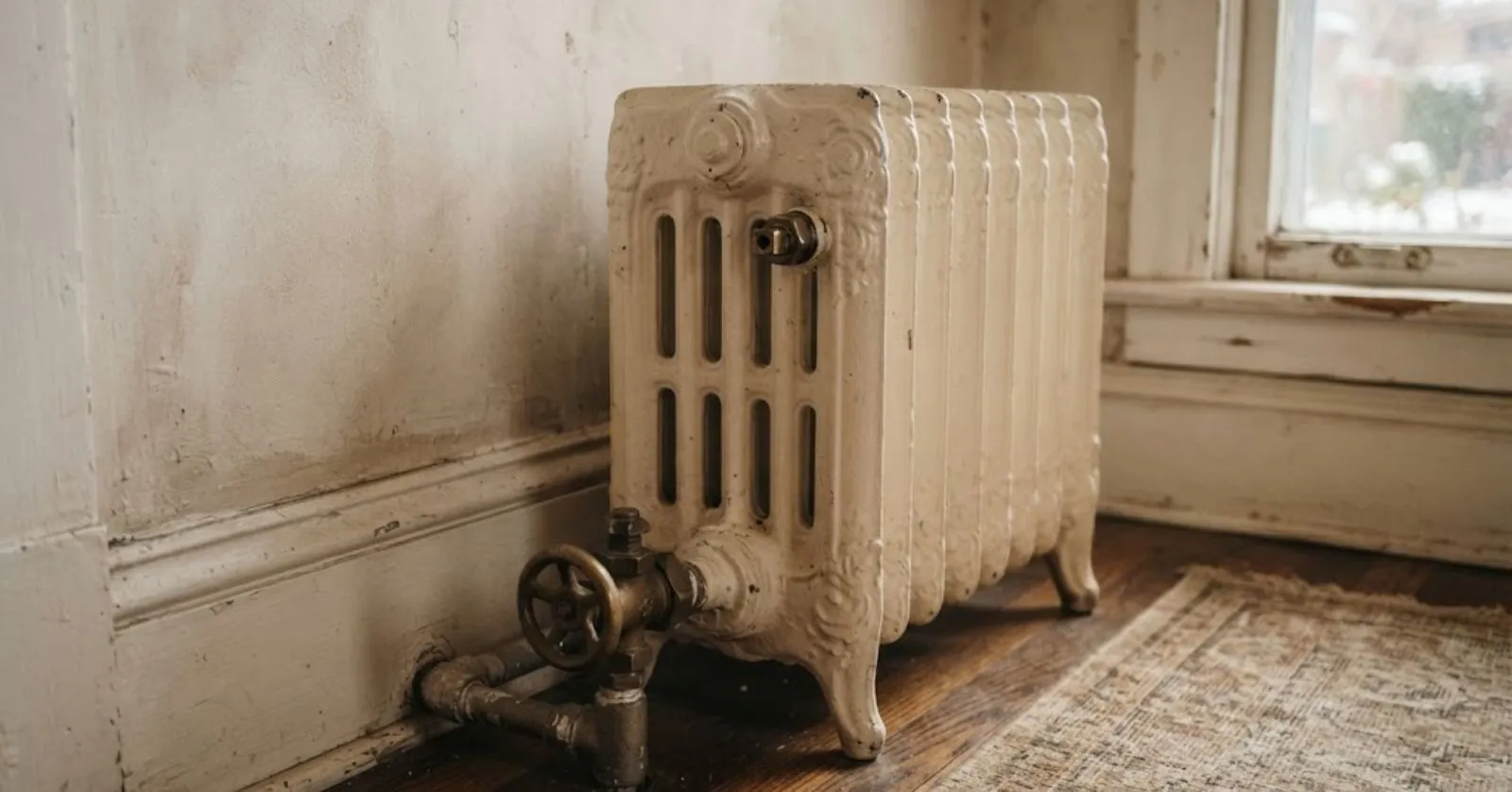
Some of Englewood's oldest houses are still heated the way they were built, with a hot-water boiler in the basement and cast iron radiators in each room. Owners who grew up with forced air often find these systems a little mysterious. This guide covers the yearly routine, the simple tasks you can do yourself, and the signs that a system needs a professional look.
How many Englewood homes this applies to
Census estimates compiled by Point2 put about 11 percent of Englewood's homes before 1940 and roughly another 9 percent in the 1940s. Radiator heat was common in houses of that era, and many still have it, either with the original boiler or a newer one feeding the old radiators.
These are hot-water systems in most local houses. A few older buildings use steam, which works differently and needs a technician familiar with it, so tell whoever you call which kind you have.
A yearly routine for radiator homes
- Early fall service. Have the boiler inspected, including the burner, controls, relief valve, expansion tank and circulator.
- Bleed the radiators. Release trapped air so every radiator heats fully.
- Check the pressure. With the system cold, note the gauge reading so you know what normal looks like.
- Clear around radiators. Move furniture and heavy curtains that block heat from reaching the room.
- Watch the first cold week. Listen for new noises and note any radiator that heats slowly.
How to bleed a radiator safely
Bleeding releases air that keeps hot water from filling the radiator. It is a simple job, but hot water can scald.
- Turn the heat on and let the system warm up, then turn it off and let the radiators cool slightly.
- Find the small bleed valve near the top of the radiator, usually on one end.
- Hold a rag and a small cup under the valve and open it slowly with a radiator key or screwdriver.
- Close the valve as soon as water, not air, comes out.
- Start with the radiators closest to the boiler and work outward, then upward.
- Check the boiler pressure afterward. Bleeding many radiators can lower it, and the system may need topping up.
Radiators cold or boiler acting up?
Tell us the pressure reading and which rooms are cold. We respond 24/7 when the heat is out.
Common sounds and what they mean
Radiator systems talk. These are the noises owners ask about most.
| Sound | Likely cause | What to do |
|---|---|---|
| Gurgling in radiators | Air in the system. | Bleed the radiators. |
| Banging or knocking at the boiler | Scale on the heat exchanger or poor circulation. | Have the boiler serviced and flushed. |
| Constant dripping from a pipe near the boiler | Relief valve opening under high pressure. | Have the expansion tank and fill valve checked. |
| Humming with no heat moving | Circulator pump running but failing. | Have the pump checked or replaced. |
| Clicking as the system heats | Pipes expanding. | Usually normal. |
Pressure, relief valves and the expansion tank
A hot-water system is a closed loop, and it needs a small amount of pressure to push water to the top floor. On many two-story houses, a cold system reads somewhere around 12 to 15 psi on the boiler gauge and rises as it heats.
The relief valve on the boiler is a safety device that opens if pressure gets too high, typically near 30 psi. When it drips, the valve is usually doing its job. The real cause is most often an expansion tank that has lost its air charge, so water has nowhere to expand as it heats.
The boiler's fill line also connects the heating loop to your drinking water, so it needs backflow protection. The IPC (International Plumbing Code) requires a backflow preventer on that connection, and a failed one should be replaced rather than bypassed.
Updating an older system, piece by piece
Radiators rarely need replacing. The parts around them are what wear out: circulator pumps, zone valves, expansion tanks, relief valves and the boiler itself. Most of these can be replaced individually, which lets owners update a system gradually.
When the boiler itself fails, a modern high-efficiency boiler can feed the existing radiators. It needs its own venting and a gas supply sized for its input, and it should be set up for Englewood's altitude. Our boiler repair page explains repair versus replacement in more detail, and gas line installation covers the supply side.
Thermostatic radiator valves, which control each radiator individually, are a popular upgrade for rooms that run too hot. They work best on a system that is balanced and free of air first. Adding or removing radiators changes the system's balance too, so plan those changes with a technician rather than piecemeal.
Buying a house with radiator heat
If you are buying an older Englewood home with a boiler, ask for its age and service records, and have it inspected along with the rest of the house. Radiators themselves rarely fail, so the questions are mostly about the boiler, the pump, the expansion tank and any leaks at radiator valves.
Look for signs of past leaks under radiators, such as stained floors, and ask whether any radiators have been removed or capped. Removed radiators can leave rooms underheated, and capped lines can hide old leaks. A home without central air will also need a separate cooling plan, since a boiler system has no ducts to share. Ask the seller when the relief valve and expansion tank were last replaced, since both are inexpensive parts that prevent most pressure problems.
Safety checks for any boiler home
These basics apply to every gas-fired heating system.
- Install carbon monoxide alarms on every level, including near sleeping areas.
- Keep storage, laundry and flammable items clear of the boiler and its vent.
- Never block the combustion air openings in a boiler room door or wall.
- Do not paint over radiator bleed valves, since you will need them each fall.
- If a carbon monoxide alarm sounds, leave the house and call 911 from outside.
When the heat goes out in winter
A boiler failure during a hard freeze is urgent, because a cold house puts pipes at risk. While you wait for help, prop open sink cabinets along outside walls and leave a faucet dripping. If you smell gas or a carbon monoxide alarm sounds, leave the house and call Xcel Energy or 911 from outside first.
If a pipe has already frozen, see our frozen pipe repair page for safe next steps.
Some larger homes in Cherry Hills Village run multi-zone versions of the same hot-water systems.
Sources
- Point2Homes, Englewood, Colorado housing age estimates from census data.
- International Code Council, International Plumbing Code boiler fill backflow protection.
- Boiler manufacturers' installation and operation manuals, pressure and relief valve guidance.
This guide is general information for Englewood-area property owners, not a substitute for an on-site inspection. Utility programs and rules change, so confirm details with the agency named.