Spring Snowmelt, Sump Pumps and Homes Near Little Dry Creek
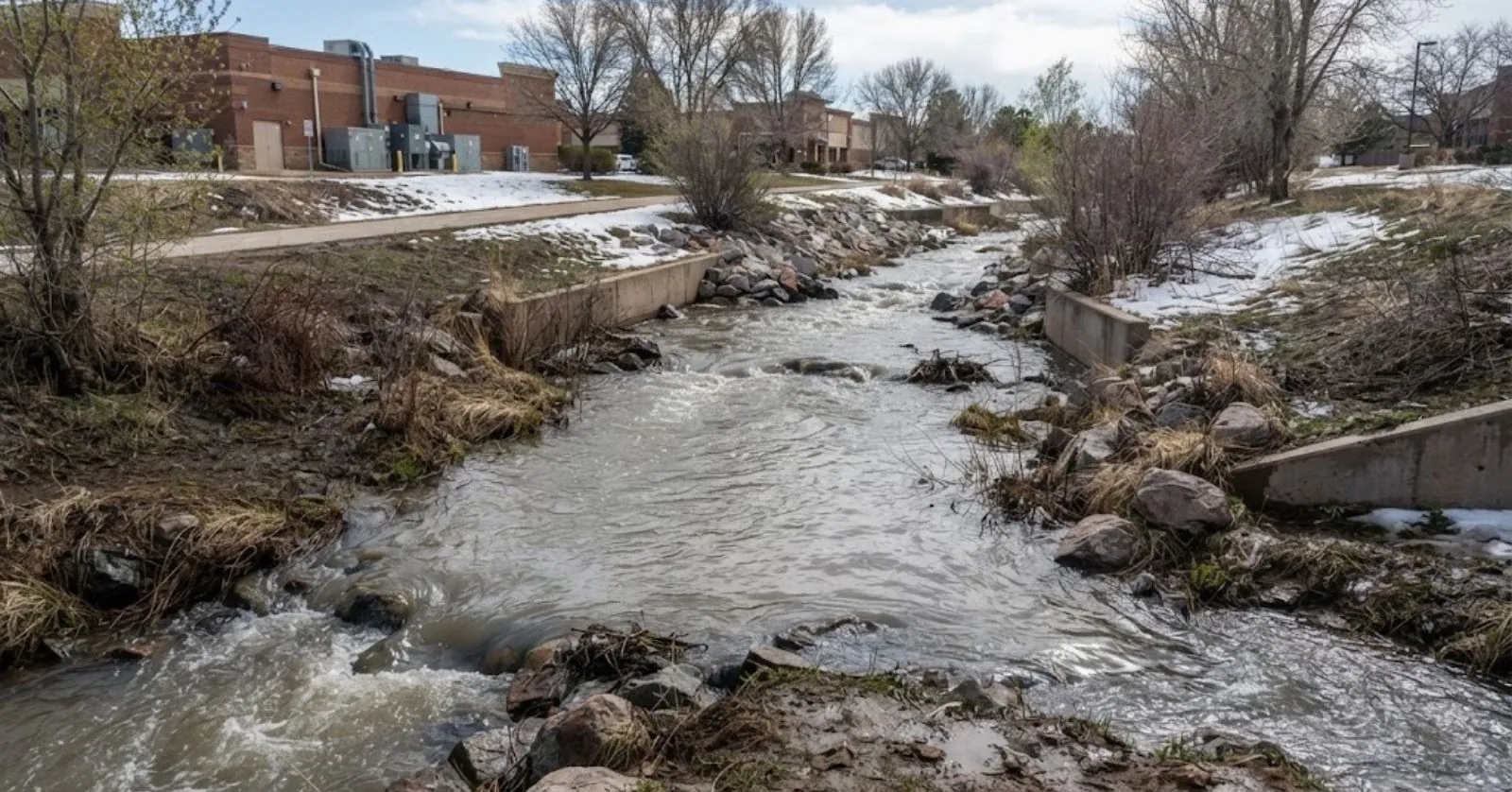
Spring along the Front Range can bring heavy wet snow, quick melts and strong thunderstorms, sometimes all in the same week. For Englewood homes with basements, that is when water tends to find its way in. This guide explains where spring water comes from, what the city's creeks and river mean for nearby homes, and how to make sure a sump pump is ready before the season starts.
Englewood's creeks and river
Little Dry Creek flows through Englewood on its way to the South Platte River, passing near downtown and the CityCenter area. A 1974 drainage plan by the Urban Drainage and Flood Control District described a May 1973 storm in which water ponded behind the Clarkson Street roadway fill and flooded nearby houses and a church.
Much has changed since then, and the creek has been the focus of flood control and redevelopment work over the years. One Mile High Flood District project rebuilt roughly 500 feet of channel just west of the Broadway overpass near downtown. It added a naturalized channel, a new outfall and new trails.
The South Platte runs along the city's west side. The June 1965 flood on that river damaged communities including Englewood, and Chatfield Dam was built upstream afterward to control river floods.
Surface flooding, groundwater and sewer backups
The City of Englewood's flood hazard information points out that property can be affected by more than creek flooding. Groundwater intrusion and sewer backups are separate risks, and each needs a different fix.
Surface water comes in through window wells, doors or low spots after heavy rain or fast snowmelt. Groundwater seeps through the floor and walls when the water table rises. Sewer backups come up through floor drains when the main line is overwhelmed or blocked. A sump pump handles groundwater. It does not stop a sewer backup, which is a separate problem covered on our drain cleaning page.
What to do before spring: a sump pump check
A pump that has sat idle all winter may not start when it is finally needed.
- Unplug and replug the pump to confirm it has power, or check the dedicated outlet and breaker.
- Slowly pour a bucket of water into the pit and confirm the pump starts and shuts off on its own.
- Check that the float moves freely and is not snagged on the pit wall or the power cord.
- Follow the discharge line outside and make sure it is clear and drains away from the foundation.
- Test the battery backup if you have one, and replace batteries on the manufacturer's schedule.
Sump pump not running as water rises?
Check power first, then call. We respond 24/7 to failed pumps.
Sump pump upgrades and what they solve
Not every home needs every upgrade. These are the common ones and what they address.
| Upgrade | What it solves | Worth it when |
|---|---|---|
| Battery backup pump | Keeps pumping during a power outage. | The basement is finished or holds valuables. |
| High-water alarm | Warns before water reaches the floor. | The pump is out of sight or you travel. |
| New check valve | Stops water draining back into the pit. | The pump cycles often or clunks loudly. |
| Rerouted or extended discharge | Keeps water from cycling back to the foundation. | The line ends near the house or freezes. |
| Replacement pump | Restores reliable pumping. | The pump is roughly ten years old or struggling. |
Timing your spring checks
Along the Front Range, March is typically Denver's snowiest month, and heavy, wet spring storms often melt within days. That combination sends a lot of water into the ground quickly, right when many sump pumps have been sitting idle since the previous summer.
A good habit is to test the pump in late February or early March, then again after the first big melt. If you have a battery backup, check it at the same time. It takes ten minutes and catches most failures before they matter.
Window wells and basement doors
Basement window wells collect snow and rain, and a well without a working drain can fill like a bucket and push water through the window. Clear leaves and debris from window wells in the fall, check that each has a drain or gravel base, and consider clear covers on wells that fill often.
Exterior basement stairwells usually have a floor drain at the bottom. If it is clogged with leaves, water pools against the door. Clearing it is a simple spring task that prevents a surprising number of wet basements. While you are outside, check that the sump discharge line is not buried under a snowbank or blocked by ice.
Outside the house: grading and downspouts
Much of the water that ends up in a sump pit starts on the roof. Downspouts that dump next to the foundation send snowmelt and storm water straight down along the basement walls. Extensions that carry water several feet away, and soil graded to slope away from the house, reduce how hard the pump has to work.
Sump discharge should follow the same principle. The IPC (International Plumbing Code) does not allow groundwater to be drained into a sewer meant only for sewage, so the pump should discharge outside, away from the foundation and not toward a neighbor's property.
Flood insurance is separate
The City of Englewood notes that standard homeowners insurance does not cover flood losses, and that flood insurance is available whether or not a property is in a mapped floodplain. Renters can insure their contents even if the owner does not insure the building.
You can look up your address on the Mile High Flood District's flood hazard map, which the city links from its flood hazard page. Check it, and your policy, before spring rather than after water arrives. Sump pump failure and sewer backup coverage are also often separate riders.
If water gets in
Keep clear of standing water near outlets, and cut power at the breaker panel only if you can reach it dry. The city also reminds residents never to walk or drive through moving floodwater, since six inches can knock a person down.
If the pump has failed, our sump pump repair service responds 24/7. Once the water source is under control, drying the basement is a separate job, covered on our water mitigation page.
Homes near Bear Creek in neighboring Sheridan face similar spring groundwater, so the same pump check applies there.
Sources
- City of Englewood, Flood Hazard Information.
- Urban Drainage and Flood Control District, Little Dry Creek Major Drainageway Planning (1974).
- Mile High Flood District, Little Dry Creek at Englewood Plaza project.
- U.S. Geological Survey, Floods of June 1965 in the South Platte River basin.
This guide is general information for Englewood-area property owners, not a substitute for an on-site inspection. Utility programs and rules change, so confirm details with the agency named.