Who Owns Your Sewer Line in Englewood? A Guide to the Sanitation Districts
When sewage backs up into an Englewood basement, the first question is usually whose problem it is. The answer depends on where the blockage is and which sanitation district serves the address. This guide walks through how Englewood's sewer service is organized, where the owner's responsibility ends, and what to do the moment a backup starts.
Englewood has more than one sewer district
Englewood's wastewater is treated regionally at South Platte Renew, near Santa Fe Drive and Dartmouth Avenue. The pipes that carry wastewater to it are owned and maintained by several collection systems, including the City of Englewood's and independent sanitation districts that cover parts of the city and neighboring areas.
Because of that patchwork, two houses a few blocks apart can be in different districts. South Platte Renew keeps an online map showing which water, sewer and storm districts serve a given address. Looking yours up now saves time during an emergency.
Where your responsibility ends
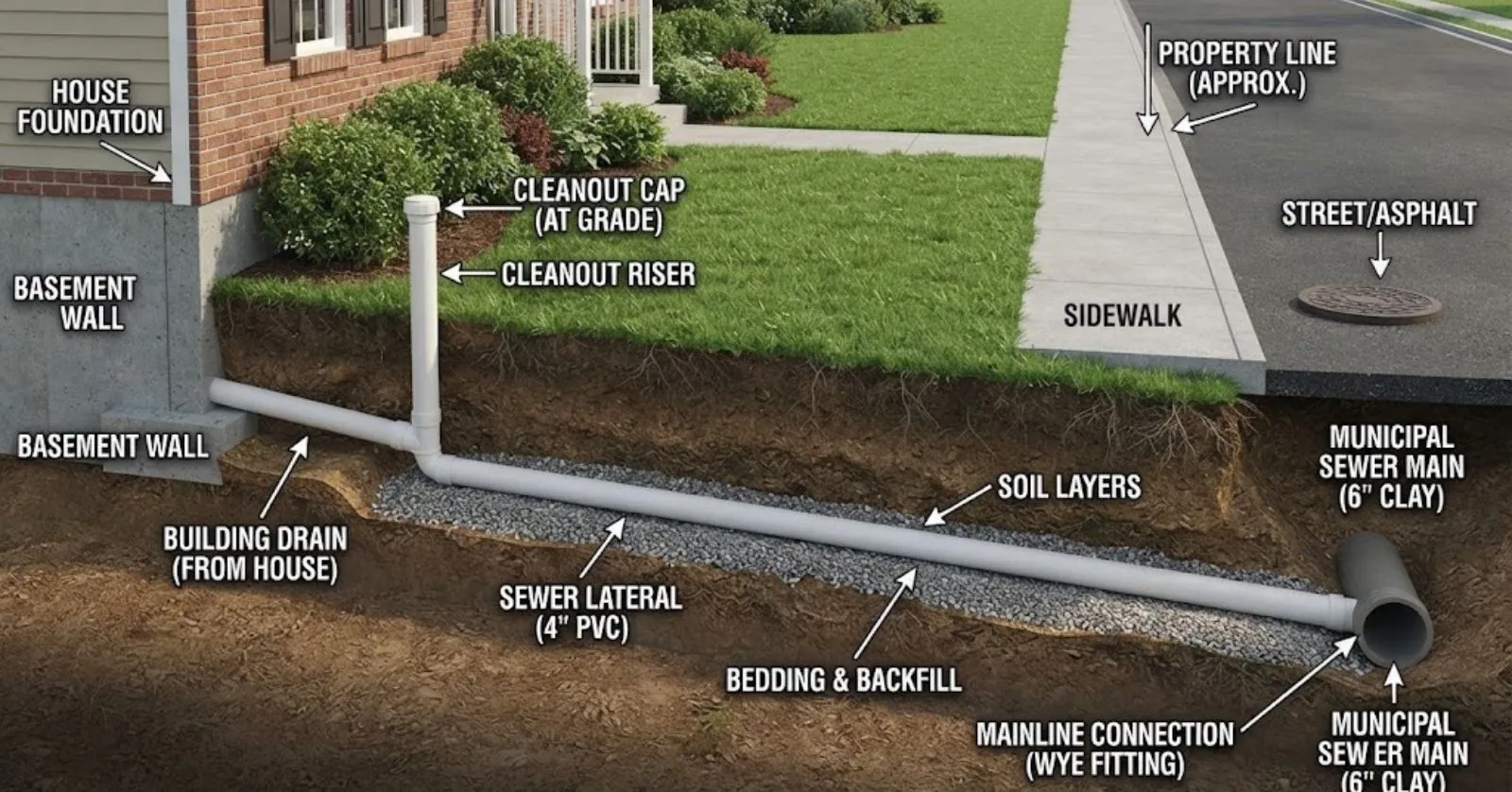
South Englewood Sanitation District No. 1 spells out its rule plainly. The sewer service line from the building up to and including the tap into the district's main is the property owner's responsibility. The main itself, which the district describes as ranging from 8 to 24 inches in diameter and running roughly 6 to 25 feet below ground, is the district's.
That means the owner is responsible for the entire lateral under the yard, often under part of the street as well, including the connection at the main. Other districts serving Englewood have similar rules, though details can vary, so check with the district for your address.
Who pays for cleanup after a backup
The same district states that when a backup is caused by a problem in its main, it sends a cleanup contractor. It does not pay for personal loss, reconstruction or flooring. When the backup is caused by a blockage in the owner's lateral, cleanup and repair are the owner's responsibility.
Sewage backing up right now?
Stop all water use in the house and call. The line is answered 24/7.
What to do the moment a backup starts
These steps limit damage and help you figure out whose side the problem is on.
- Stop all water use in the house, including washers, dishwashers, showers and toilets.
- Ask a neighbor or two whether they are having backups. Several homes affected at once suggests a problem in the main, so call the district.
- If only your house is affected, the blockage is most likely in your lateral. Call a plumber to clear it.
- Keep people and pets away from sewage and take photos before cleanup for insurance.
- Do not pour bleach or drain chemicals into the line. The district warns bleach can harden grease.
Common causes, and whose problem they are
This is a general guide. The exact line depends on where the blockage is found.
| Cause | Usually where | Usually whose responsibility |
|---|---|---|
| Roots in clay or cast iron joints | Owner's lateral. | Owner. |
| Grease buildup from the kitchen | Owner's lateral, sometimes the main. | Owner, unless in the main. |
| Collapsed or sagging lateral | Owner's lateral. | Owner. |
| Blockage or failure in the district main | District main. | District, for cleanup of main-caused backups. |
| Items flushed that should not be | Owner's lateral. | Owner. |
How your sewer bill is set
In South Englewood Sanitation District No. 1, the sewer charge is based on winter water use, using the lowest consecutive two-month period between October 1 and May 15. The idea is that almost no one irrigates in those months, so water use then reflects what actually goes down the drain.
That has a practical side effect. A hidden leak running through the winter can raise the water use the charge is based on. Finding and fixing leaks in the fall protects both your water bill and your sewer bill. Our leak detection page explains how hidden leaks are found.
Backwater valves: when they help
A backwater valve is a one-way flap installed in the building sewer. It lets wastewater leave the house but closes if sewage tries to flow back in from the district side. The IPC (International Plumbing Code) requires one where fixtures sit below the level of the next upstream manhole, which describes some Englewood basements, especially on lower lots.
A backwater valve protects against backups that start in the main. It does nothing for a blockage in your own lateral, since that sewage comes from your own drains. It also needs occasional cleaning to keep the flap sealing, so it should be installed where it can be reached.
If your basement has flooded from the main more than once, ask a plumber whether a backwater valve fits your layout. It is usually a permitted job, and some insurers view it favorably.
Buying, selling and renting
Because the lateral belongs to the owner, sewer condition is a real part of a home's value. Buyers of older Englewood houses are increasingly ordering sewer scopes before closing, and sellers with a recent scope or repair paperwork have an easier time answering questions.
If you are selling, keep receipts for any cleaning, repairs or lining and share them with buyers. Documented work answers the most common inspection question before it is asked.
For rentals, the owner is normally responsible for the lateral, while tenants are responsible for not putting grease and non-flushable items down the drains. A clear lease clause about both, and a camera record of the line's condition, prevents arguments after a backup.
Protecting yourself before a backup
Know where your cleanout is. The IPC calls for a cleanout at the base of each drain stack, and most older Englewood homes have one in the basement. Some also have an exterior cleanout near the foundation. A reachable cleanout makes clearing a line faster and cheaper.
Keep grease out of the kitchen drain by wiping pans into the trash, and use South Platte Renew's annual grease takeback for larger amounts of cooking oil. Have a root-prone lateral cleaned on a schedule. If camera footage shows cracks or sags, repairing them before a backup is almost always cheaper than cleanup afterward. Our sewer line repair page covers the options.
Finally, check your homeowners policy. Sewer backup damage is commonly excluded unless a backup rider was added. If a backup has already soaked floors or walls, water damage restoration is a separate job from clearing the line.
Neighboring towns are split among several districts as well, so owners in Cherry Hills Village should check the same way before assuming who owns what.
Sources
- South Englewood Sanitation District No. 1, sewer service line responsibility and billing.
- South Platte Renew, interactive district map.
- SW Metro Water and Sanitation, sewer backup insurance guidance.
This guide is general information for Englewood-area property owners, not a substitute for an on-site inspection. Utility programs and rules change, so confirm details with the agency named.